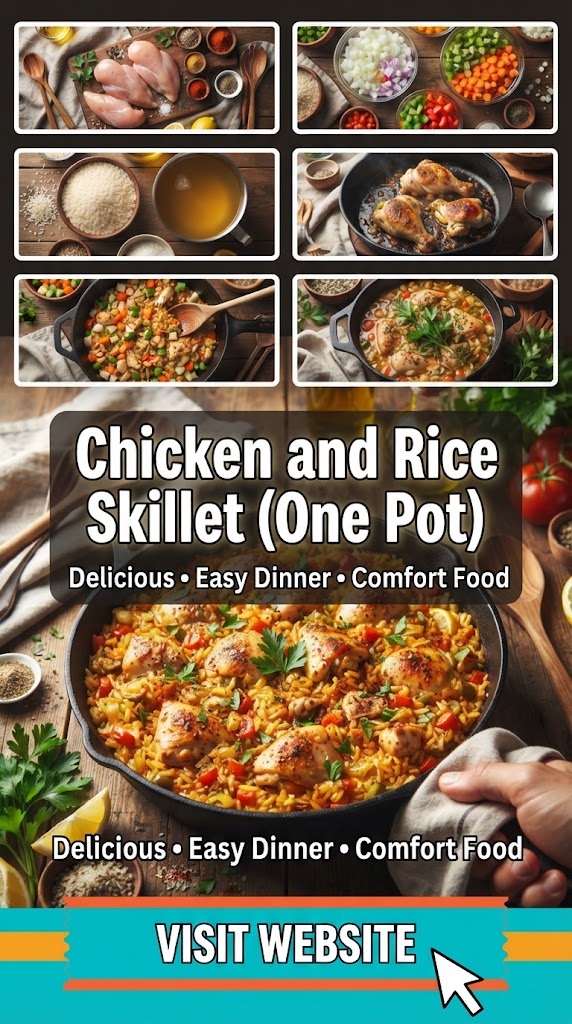
Chicken and Rice Skillet (One Pot)
Chicken and Rice Skillet (One Pot)
Chicken and rice skillet is the kind of comforting dinner that earns a permanent place in your weekly meal rotation. Everything cooks together in one pan, combining tender, seasoned chicken with fluffy rice, aromatic vegetables, and a savory broth that gives every grain incredible flavor. It is hearty enough for a family dinner, simple enough for a busy weeknight, and requires very little cleanup.
This one-pot chicken and rice recipe is designed to produce juicy chicken and flavorful rice without complicated techniques. The chicken is first seasoned and browned to develop a delicious golden crust. Onion, garlic, and vegetables are then cooked in the same skillet, allowing them to absorb the flavorful browned bits left behind. Finally, rice and broth are added, and everything gently simmers until the rice is tender and the chicken is completely cooked.
The result is a satisfying meal with protein, grains, and vegetables all in one dish.
Why You’ll Love This Chicken and Rice Skillet
There are plenty of reasons this recipe is worth adding to your dinner routine.
One-pot convenience: Everything cooks in one skillet, which means fewer dishes and easier cleanup.
Comforting and filling: Tender chicken and fluffy rice create a hearty meal that satisfies without requiring several side dishes.
Family-friendly flavor: The seasoning is savory and flavorful without being overly spicy.
Budget-friendly: Chicken, rice, vegetables, and broth are inexpensive ingredients that can feed the whole family.
Easy to customize: You can add different vegetables, herbs, spices, or even cheese to make the recipe your own.
Great for leftovers: The leftovers can be refrigerated and reheated for an easy lunch or dinner the next day.
Complete Chicken and Rice Skillet Recipe
Recipe Overview
Prep Time: 15 minutes
Cook Time: 35–40 minutes
Total Time: About 50–55 minutes
Servings: 4–6
Cuisine: American-inspired comfort food
Course: Main Course
Cooking Method: Stovetop
Difficulty: Easy
Ingredients
For the Chicken
- 1 ½ pounds boneless, skinless chicken thighs or chicken breasts
- 1 teaspoon kosher salt
- ½ teaspoon black pepper
- 1 teaspoon paprika
- ½ teaspoon garlic powder
- ½ teaspoon onion powder
- ½ teaspoon dried Italian seasoning
- 1 tablespoon olive oil
- 1 tablespoon butter
For the Rice and Vegetables
- 1 medium yellow onion, finely diced
- 3 cloves garlic, minced
- 1 medium carrot, diced
- 1 small bell pepper, diced
- 1 cup long-grain white rice
- 2 ¼ cups chicken broth
- 1 tablespoon tomato paste
- ½ teaspoon paprika
- ½ teaspoon dried thyme
- ½ teaspoon dried parsley
- ½ teaspoon salt, or to taste
- ¼ teaspoon black pepper
- ½ cup frozen peas
- 1 tablespoon chopped fresh parsley
- 1 tablespoon lemon juice, optional
Optional Garnishes
- Fresh parsley
- Sliced green onions
- Lemon wedges
- Grated Parmesan cheese
- Red pepper flakes
- A small pat of butter
How to Choose the Best Chicken
Both chicken breasts and chicken thighs work well in this recipe.
Chicken thighs are especially forgiving because they contain more fat and remain juicy during cooking. They also provide a richer flavor.
Chicken breasts are leaner and work beautifully when cooked carefully. If using very large chicken breasts, cut them into smaller, evenly sized pieces so they cook at the same rate as the rice.
For the most consistent results, choose chicken pieces that are approximately the same thickness.
How to Choose the Rice
Long-grain white rice is recommended because it cooks relatively evenly and produces fluffy grains.
Avoid substituting brown rice without changing the recipe. Brown rice requires considerably more liquid and a longer cooking time.
Basmati rice can also work, although it may require slightly less cooking time. If using basmati, keep an eye on the skillet during the final stage.
Short-grain rice can become considerably stickier, so it will produce a different texture.
The most important rule is to avoid changing the rice-to-liquid ratio too much, because too much liquid can produce mushy rice while too little can leave the rice undercooked.
Step-by-Step Instructions
Step 1: Prepare the Chicken
Start by patting the chicken dry with paper towels.
Removing excess moisture helps the chicken brown instead of steaming.
If using chicken breasts, cut them into large bite-sized pieces. If using chicken thighs, you can leave them whole for a more substantial presentation or cut them into chunks for easier serving.
Combine the salt, black pepper, paprika, garlic powder, onion powder, and Italian seasoning in a small bowl.
Sprinkle the seasoning evenly over the chicken.
Gently toss the chicken until every piece is coated.
Allow the seasoned chicken to sit for approximately 5 minutes while you prepare the skillet.
Step 2: Heat the Skillet
Choose a large, deep skillet or sauté pan with a lid.
A heavy-bottomed skillet works particularly well because it distributes heat more evenly.
Place the skillet over medium-high heat.
Add the olive oil and butter.
Allow the butter to melt completely and become lightly foamy.
The pan should be hot enough that the chicken begins to sizzle immediately when it touches the surface.
Step 3: Brown the Chicken
Add the chicken to the skillet in a single layer.
Do not overcrowd the pan.
If necessary, brown the chicken in two batches.
Cook the chicken for approximately 3–4 minutes on the first side without moving it too much.
Turn the pieces and cook for another 2–3 minutes.
The goal at this stage is browning, not fully cooking the chicken.
The chicken should develop a golden-brown exterior.
Once browned, transfer the chicken to a clean plate.
It will finish cooking later in the rice.
Important Tip
Do not worry if the chicken is still slightly undercooked in the center at this point. That is intentional.
The chicken will return to the skillet later and finish cooking while the rice simmers.
Step 4: Cook the Onion and Vegetables
Reduce the heat to medium.
Add the diced onion to the same skillet.
Cook for approximately 2–3 minutes, stirring occasionally.
The onion should begin to soften.
Add the diced carrot and bell pepper.
Cook for another 3–4 minutes.
The vegetables should become slightly tender while still retaining some texture.
Scrape the bottom of the pan gently as you stir.
Those browned pieces left behind by the chicken are packed with flavor and will become part of the rice.
Step 5: Add the Garlic
Add the minced garlic.
Cook for approximately 30–60 seconds.
Stir constantly.
Garlic cooks quickly, and burning it can create a bitter taste.
Once the garlic becomes fragrant, move immediately to the next step.
Step 6: Toast the Rice
Add the uncooked rice directly to the skillet.
Stir it together with the vegetables.
Allow the rice to cook for approximately 1–2 minutes.
This small step makes a noticeable difference.
Toasting the rice lightly helps develop a deeper flavor and allows the grains to absorb some of the savory flavors already present in the skillet.
Stir frequently so the rice does not stick or burn.
Step 7: Add the Tomato Paste and Seasonings
Add the tomato paste.
Sprinkle in the paprika, thyme, parsley, salt, and black pepper.
Stir thoroughly.
Cook for approximately 30 seconds.
The tomato paste should coat the rice and vegetables.
It adds subtle richness, color, and depth without turning the dish into a tomato-heavy rice recipe.
Step 8: Add the Chicken Broth
Slowly pour the chicken broth into the skillet.
Stir gently.
Use your spoon to scrape any remaining browned bits from the bottom of the pan.
Those bits dissolve into the broth and give the rice an especially rich flavor.
Bring the mixture to a gentle simmer.
Do not allow it to boil aggressively.
A gentle simmer is ideal for cooking rice evenly.
Step 9: Return the Chicken to the Skillet
Place the browned chicken pieces back into the skillet.
If there are any juices that accumulated on the plate, pour them into the skillet as well.
Nestle the chicken into the rice mixture.
Make sure the rice is mostly submerged in the liquid.
Bring everything to a gentle simmer.
Step 10: Cover and Cook
Reduce the heat to low.
Cover the skillet tightly with a lid.
Allow the chicken and rice to cook for approximately 18–22 minutes.
Try not to repeatedly remove the lid.
Steam is important because it helps cook the rice evenly.
Opening the lid too frequently allows steam to escape and can increase the cooking time.
After approximately 18 minutes, check the rice.
The grains should be tender and most of the liquid should be absorbed.
If the rice is still firm and the skillet looks dry, add a small amount of warm chicken broth, cover again, and cook for another 3–5 minutes.
Step 11: Add the Peas
When the rice is nearly finished, sprinkle the frozen peas over the top.
Cover the skillet again.
Cook for approximately 2–3 minutes.
Frozen peas do not require much cooking and can become dull and mushy if boiled for too long.
Adding them near the end keeps them bright and tender.
Step 12: Check the Chicken
The chicken must be fully cooked before serving.
The safest way to check is with an instant-read food thermometer.
Chicken should reach an internal temperature of 165°F (74°C) at the thickest part.
If the chicken has not reached the appropriate temperature, cover the skillet and continue cooking until it does.
Step 13: Rest the Skillet
Turn off the heat.
Leave the lid on and allow the skillet to rest for approximately 5 minutes.
This resting period gives the rice time to finish absorbing moisture.
It also allows the chicken juices to redistribute.
Do not skip this step if you want fluffy, flavorful rice.
Step 14: Finish and Garnish
Remove the lid.
Fluff the rice gently with a fork.
Avoid aggressively stirring because that can break the rice grains and make the dish sticky.
Add the lemon juice if using.
Taste the rice.
Adjust the seasoning with additional salt or black pepper if necessary.
Sprinkle fresh parsley over the top.
Serve immediately.
What Makes This One-Pot Chicken and Rice So Flavorful?
The secret is layering flavor.
Instead of putting everything into the skillet at the same time, each ingredient gets a chance to develop its own flavor.
First, the chicken is seasoned and browned.
The browning creates flavorful bits on the bottom of the skillet.
Then onions and vegetables cook in those flavorful juices.
Garlic adds aroma.
Rice is lightly toasted.
Tomato paste contributes depth.
Chicken broth brings everything together.
Finally, the chicken finishes cooking directly in the rice.
This creates a much more flavorful dish than simply boiling chicken and rice together.
Tips for Perfect Chicken and Rice Every Time
1. Use a Large Skillet
A crowded skillet can cause uneven cooking.
Choose a pan large enough to spread the rice and chicken into a relatively even layer.
A deep skillet with a tight-fitting lid is ideal.
2. Don’t Skip Browning the Chicken
Browning is one of the most important flavor-building steps.
Even a few minutes of browning can significantly improve the finished dish.
3. Don’t Wash Away the Flavor
After removing the chicken, do not wash the skillet before cooking the vegetables.
The browned bits at the bottom are valuable.
They dissolve into the broth and create flavor.
4. Keep the Lid Closed
Rice needs steam.
Constantly lifting the lid allows heat and moisture to escape.
If possible, leave the skillet covered until the rice has nearly finished cooking.
5. Don’t Stir the Rice Too Much
Rice can become sticky when repeatedly stirred during cooking.
Once the broth has been added, stir only enough to distribute the ingredients.
6. Let the Rice Rest
Five minutes of resting time can make the difference between properly finished rice and rice that seems slightly wet.
Common Mistakes to Avoid
Using Too Much Liquid
Adding extra broth may seem like a good way to prevent dry rice, but excessive liquid can produce mushy rice.
Start with the recommended amount and only add more if necessary near the end.
Cooking on High Heat
High heat can cause the liquid to evaporate before the rice has finished cooking.
Once the mixture reaches a simmer, reduce the heat to low.
Cutting the Chicken Too Small
Very small chicken pieces can become dry.
Use medium-sized pieces that can remain juicy while the rice cooks.
Overcrowding the Chicken
If all the chicken pieces are packed tightly together, they will steam instead of brown.
Give them enough room to make contact with the hot pan.
Burning the Garlic
Garlic needs less than a minute to become fragrant.
If it turns dark brown or black, it can taste bitter.
Skipping the Resting Period
Allowing the skillet to rest helps the rice finish absorbing moisture and gives the flavors time to settle.
Easy Variations
Cheesy Chicken and Rice
For a creamy, cheesy version, sprinkle 1 cup of shredded cheddar cheese over the finished skillet.
Cover for 2–3 minutes until melted.
You can also use Monterey Jack, mozzarella, or a Mexican-style cheese blend.
Spicy Chicken and Rice
Add:
- ½ teaspoon crushed red pepper flakes
- ½ teaspoon chili powder
- 1 diced jalapeño
For even more heat, serve with your favorite hot sauce.
Mexican-Style Chicken and Rice
Replace the Italian seasoning with:
- 1 teaspoon chili powder
- 1 teaspoon cumin
- ½ teaspoon smoked paprika
Add corn and black beans near the end of cooking.
Top with cilantro, lime juice, and avocado.
Creamy Chicken and Rice
For a richer skillet, stir ¼–½ cup heavy cream into the cooked rice during the final few minutes.
You can also add Parmesan cheese.
Mushroom Chicken and Rice
Add 8 ounces of sliced mushrooms with the onions.
Cook until the mushrooms release their moisture and begin to brown.
The earthy mushroom flavor pairs beautifully with chicken and rice.
Broccoli Chicken and Rice
Add small broccoli florets during the final 5–7 minutes of cooking.
Adding broccoli too early can make it overly soft.
Lemon Herb Chicken and Rice
Increase the lemon flavor by adding:
- 1 teaspoon lemon zest
- 1–2 tablespoons lemon juice
- Fresh parsley
- Fresh thyme
This creates a lighter and brighter version.
What to Serve With Chicken and Rice Skillet
This dish is substantial enough to serve on its own, but a few simple sides can make the meal even better.
Green Salad
A crisp green salad with lettuce, cucumber, tomatoes, and a light vinaigrette provides freshness.
Steamed Vegetables
Broccoli, green beans, asparagus, or carrots work especially well.
Garlic Bread
Warm garlic bread is excellent for soaking up any remaining juices.
Roasted Vegetables
Roasted zucchini, cauliflower, or Brussels sprouts add additional texture.
Simple Cucumber Salad
A cool cucumber salad creates a refreshing contrast with the warm skillet.
How to Store Leftovers
Allow the chicken and rice to cool slightly before transferring it to an airtight container.
Refrigerate leftovers promptly.
For best quality, consume refrigerated leftovers within 3–4 days.
When storing, divide the food into shallow containers if possible so it cools more efficiently.
How to Reheat Chicken and Rice
Rice can dry out during refrigeration.
The easiest way to restore moisture is to add a small splash of chicken broth or water before reheating.
Microwave Method
Place a serving in a microwave-safe bowl.
Add 1–2 tablespoons of broth or water.
Cover loosely.
Heat until steaming hot, stirring halfway through.
Make sure the chicken and rice are heated thoroughly.
Stovetop Method
Place the leftovers in a skillet.
Add a splash of broth or water.
Cover and heat over medium-low heat.
Stir occasionally until hot.
Avoid cooking the leftovers for longer than necessary because the chicken can become dry.
Can You Freeze Chicken and Rice?
Yes, chicken and rice can be frozen.
Allow the dish to cool completely before transferring it to freezer-safe containers.
For convenience, freeze individual portions.
Label each container with the date.
For best texture, use within approximately 2–3 months.
Thaw overnight in the refrigerator before reheating.
Because rice can change texture after freezing, adding a little broth during reheating helps restore moisture.
Meal Prep Instructions
This chicken and rice skillet is excellent for meal preparation.
Prepare the recipe as directed.
Allow it to cool.
Divide into four or five meal-prep containers.
Add vegetables or a small salad separately if desired.
Refrigerate until ready to eat.
For lunch, simply reheat one portion with a small splash of broth.
The recipe is especially convenient for busy weekdays because the main dish is already complete.
Frequently Asked Questions
Can I use chicken thighs instead of chicken breasts?
Absolutely.
Chicken thighs are one of the best choices because they stay moist and flavorful.
Boneless, skinless thighs are easiest for this recipe, although you can use other cuts if you adjust the cooking time accordingly.
Can I use brown rice?
Yes, but not with the exact cooking method above.
Brown rice generally requires more liquid and additional cooking time.
For reliable results, use a recipe specifically formulated for brown rice.
Why is my rice mushy?
Mushy rice usually means there was too much liquid, the rice was cooked too long, or it was stirred excessively.
Measure the broth carefully and avoid unnecessary stirring.
Why is my rice still hard?
The rice may need more time or moisture.
Add a small amount of warm broth, cover the skillet, and continue cooking over low heat.
Can I make this without vegetables?
Yes.
You can omit the vegetables, although they contribute flavor and nutrition.
If you remove a large amount of vegetables, you generally do not need to replace them with additional liquid.
Can I make it spicy?
Definitely.
Add cayenne pepper, chili flakes, jalapeño, hot sauce, or your favorite chili seasoning.
Can I add cheese?
Yes.
Cheddar, Parmesan, mozzarella, Monterey Jack, and Colby Jack are all delicious options.
Can I use leftover cooked chicken?
Yes, but the cooking method should be adjusted.
Instead of browning raw chicken, prepare the rice and vegetables first and add cooked chicken toward the end so it only needs to warm through.
Nutrition Notes
The nutritional value will vary depending on the chicken cut, amount of oil, type of broth, and optional toppings.
Chicken provides high-quality protein, while rice supplies carbohydrates for energy. Carrots, bell peppers, onions, peas, and garlic contribute vitamins, minerals, and other nutrients.
For a lighter version, use chicken breasts, reduce the butter, and increase the amount of vegetables.
For a higher-protein version, use additional chicken and slightly reduce the rice.
Make-Ahead Instructions
If you want to prepare dinner ahead of time, you can chop the vegetables and season the chicken several hours before cooking.
Keep raw chicken refrigerated until you are ready to cook.
You can also measure the rice, broth, and seasonings in advance.
When dinner time arrives, simply cook everything according to the recipe.
For the best texture, avoid fully cooking the rice hours ahead of time and then reheating it repeatedly.
A Simple Weeknight Dinner Everyone Can Enjoy
Chicken and rice skillet succeeds because it combines simple ingredients with a smart cooking method.
You don’t need an elaborate sauce or expensive ingredients.
You simply need well-seasoned chicken, aromatic vegetables, good rice, flavorful broth, and enough time for everything to cook together.
The chicken becomes golden and juicy.
The vegetables soften and add natural sweetness.
The rice absorbs the seasoned broth and chicken juices.
The result is a warm, comforting skillet meal that tastes like you spent much longer preparing it than you actually did.
It is also flexible enough to adapt to whatever ingredients you already have in your kitchen.
Add mushrooms if you have them.
Use frozen vegetables when fresh vegetables aren’t available.
Make it spicy with chili flakes.
Make it creamy with Parmesan.
Make it bright with lemon and fresh herbs.
That versatility is one of the best things about a one-pot meal.
Final Recipe Card
Chicken and Rice Skillet
Servings: 4–6
Prep: 15 minutes
Cook: 35–40 minutes
Total: About 50–55 minutes
Ingredients
- 1 ½ pounds boneless, skinless chicken
- 1 teaspoon salt
- ½ teaspoon black pepper
- 1 teaspoon paprika
- ½ teaspoon garlic powder
- ½ teaspoon onion powder
- ½ teaspoon Italian seasoning
- 1 tablespoon olive oil
- 1 tablespoon butter
- 1 diced onion
- 3 minced garlic cloves
- 1 diced carrot
- 1 diced bell pepper
- 1 cup long-grain white rice
- 2 ¼ cups chicken broth
- 1 tablespoon tomato paste
- ½ teaspoon thyme
- ½ teaspoon parsley
- ½ cup frozen peas
- 1 tablespoon fresh parsley
- 1 tablespoon lemon juice, optional
Directions
- Pat the chicken dry and season with salt, pepper, paprika, garlic powder, onion powder, and Italian seasoning.
- Heat olive oil and butter in a large deep skillet.
- Brown the chicken for 3–4 minutes per side. Remove and set aside.
- Cook the onion, carrot, and bell pepper in the same skillet.
- Add garlic and cook for 30–60 seconds.
- Stir in the uncooked rice and toast for 1–2 minutes.
- Add tomato paste and remaining seasonings.
- Pour in the chicken broth and scrape the browned bits from the bottom.
- Return the chicken to the skillet.
- Bring to a gentle simmer.
- Cover, reduce heat to low, and cook for 18–22 minutes.
- Add frozen peas during the final few minutes.
- Verify the chicken reaches 165°F (74°C).
- Turn off the heat and rest, covered, for 5 minutes.
- Fluff the rice, add lemon juice if desired, garnish with parsley, and serve.
Final Tips for the Best Results
For the most flavorful Chicken and Rice Skillet, brown the chicken well, toast the rice briefly, use flavorful chicken broth, keep the skillet covered while the rice cooks, and allow the finished dish to rest before serving.
The combination of tender chicken, fluffy seasoned rice, colorful vegetables, and savory herbs makes this one-pot dinner an easy choice for busy weeknights, family meals, meal prep, and cozy weekend dinners.