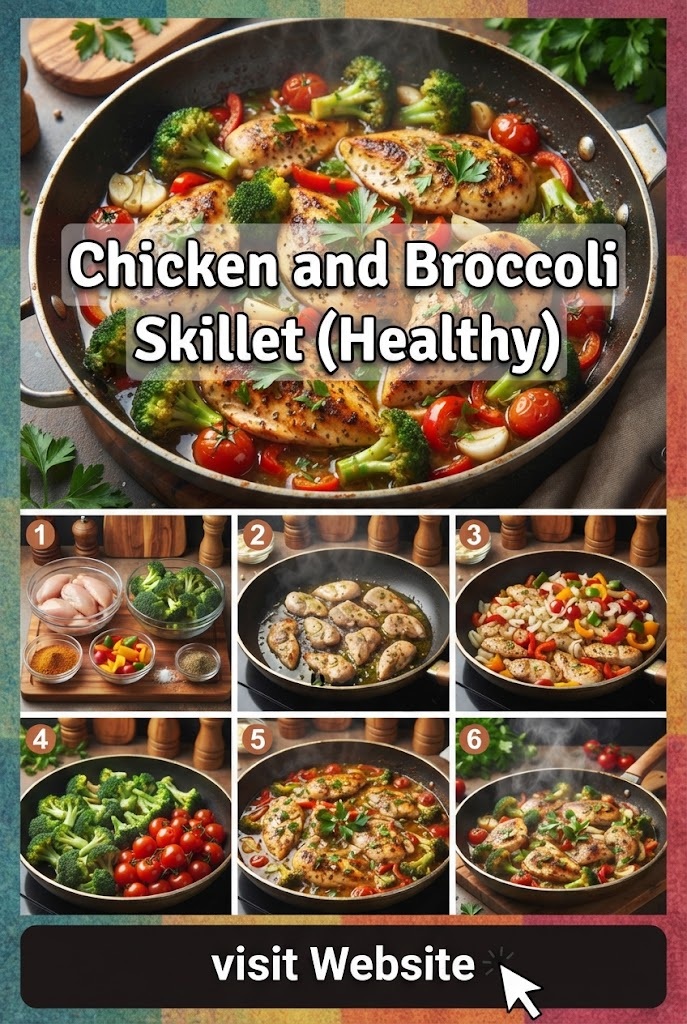
Chicken and Broccoli Skillet (Healthy)
Chicken and Broccoli Skillet (Healthy)
Chicken and broccoli skillet is the kind of meal that makes healthy eating feel easy rather than restrictive. It combines tender pieces of chicken, crisp-tender broccoli, garlic, ginger, and a light savory sauce in one pan. The entire meal comes together quickly, making it ideal for busy weeknights when you want something nutritious, flavorful, and filling without spending hours in the kitchen.
This recipe is high in protein, packed with vegetables, and flexible enough to customize with ingredients you already have. Instead of relying on a heavy cream sauce, the chicken and broccoli are coated in a simple mixture of low-sodium soy sauce, chicken broth, garlic, ginger, and a touch of honey. A small amount of cornstarch helps the sauce become glossy and cling beautifully to every piece of chicken and broccoli.
The best part is that everything cooks in one skillet, which means less cleanup after dinner.
Why You’ll Love This Chicken and Broccoli Skillet
There are plenty of reasons to make this recipe part of your regular dinner rotation.
It is quick. The preparation and cooking can be completed in roughly 30 minutes.
It uses one pan. You can cook the chicken, broccoli, and sauce in the same skillet.
It is protein-rich. Chicken breast provides a satisfying source of lean protein.
It includes plenty of vegetables. Broccoli adds fiber, vitamins, minerals, and a pleasant crunch.
The sauce is light but flavorful. Garlic, ginger, soy sauce, and a little honey create a balanced combination of savory, sweet, and aromatic flavors.
It is easy to customize. You can add other vegetables, adjust the spice level, or serve it with rice, quinoa, or cauliflower rice.
Complete Chicken and Broccoli Skillet Recipe
Recipe Overview
Prep Time: 10 minutes
Cook Time: 18–20 minutes
Total Time: About 30 minutes
Servings: 4
Cuisine: American-Asian inspired
Course: Dinner
Cooking Method: Skillet
Difficulty: Easy
Ingredients
For the Chicken
- 1 ½ pounds boneless, skinless chicken breasts
- 1 tablespoon olive oil
- ½ teaspoon salt
- ½ teaspoon black pepper
- ½ teaspoon paprika
- ¼ teaspoon garlic powder
For the Broccoli
- 4 cups fresh broccoli florets
- 2 tablespoons water
- 1 teaspoon olive oil, if needed
For the Healthy Sauce
- ⅓ cup low-sodium soy sauce
- ½ cup low-sodium chicken broth
- 1 tablespoon honey
- 1 tablespoon rice vinegar
- 2 cloves garlic, finely minced
- 1 teaspoon fresh grated ginger
- 1 tablespoon cornstarch
- 2 tablespoons cold water
- ¼ teaspoon red pepper flakes, optional
- ½ teaspoon toasted sesame oil, optional
For Finishing
- 1 tablespoon sliced green onions
- 1 teaspoon sesame seeds
- Freshly ground black pepper, to taste
- Red pepper flakes, optional
Ingredient Details
Chicken Breast
Boneless, skinless chicken breast is an excellent choice because it cooks quickly and provides plenty of protein. Cut the chicken into relatively small, evenly sized pieces so that everything cooks at approximately the same rate.
You can substitute boneless, skinless chicken thighs if you prefer darker meat. Thighs are naturally more forgiving because they contain more fat and tend to remain juicy even when cooked slightly longer.
Broccoli
Fresh broccoli works particularly well because it becomes tender while maintaining some texture. Cut large florets into smaller, bite-sized pieces.
If using frozen broccoli, there is no need to thaw it completely. However, frozen broccoli may release more moisture, so allow the excess water to evaporate before adding the sauce.
Low-Sodium Soy Sauce
Low-sodium soy sauce gives the dish its signature savory flavor without making it excessively salty.
Regular soy sauce can be used, but you may want to reduce the quantity slightly and taste the sauce before adding additional salt.
Chicken Broth
Chicken broth helps create a flavorful sauce while keeping it relatively light. Low-sodium broth gives you better control over the final salt level.
Honey
A small amount of honey balances the salty soy sauce and acidic rice vinegar. You do not need much to create a pleasant sweet-and-savory flavor.
Garlic and Ginger
Fresh garlic and ginger provide most of the aromatic character of the sauce. Fresh ingredients are strongly recommended because they give the skillet a brighter, more complex flavor.
Cornstarch
Cornstarch thickens the sauce. Always mix cornstarch with cold water before adding it to the hot skillet. This creates a slurry and helps prevent lumps.
How to Cook Chicken and Broccoli Skillet
Step 1: Prepare the Chicken
Start by trimming any excess fat or connective tissue from the chicken breasts.
Pat the chicken dry with paper towels. Removing surface moisture helps the chicken brown instead of simply steaming.
Cut the chicken into bite-sized pieces, approximately 1-inch cubes.
Place the chicken in a bowl and season it with salt, black pepper, paprika, and garlic powder.
Toss thoroughly so the seasoning coats the chicken evenly.
Do not make the pieces too large. Smaller pieces cook faster and are easier to eat with the broccoli.
Step 2: Prepare the Sauce
Before turning on the stove, prepare the sauce.
In a medium bowl, whisk together:
- Low-sodium soy sauce
- Chicken broth
- Honey
- Rice vinegar
- Minced garlic
- Grated ginger
- Red pepper flakes, if using
- Sesame oil, if using
In a separate small bowl, combine the cornstarch with 2 tablespoons of cold water.
Whisk until completely smooth.
Set both mixtures aside.
Preparing the sauce beforehand makes the cooking process much easier because the skillet moves quickly once the chicken starts browning.
Step 3: Heat the Skillet
Place a large skillet over medium-high heat.
A wide skillet is preferable because it gives the chicken enough room to brown rather than steam.
Add 1 tablespoon of olive oil.
Allow the oil to heat for approximately 30–60 seconds.
You want the oil to be hot but not smoking heavily.
Step 4: Cook the Chicken
Carefully add the seasoned chicken pieces to the hot skillet.
Spread them into a single layer.
Try not to overcrowd the pan. If the chicken pieces are packed tightly together, they will release moisture and may not develop a golden exterior.
Cook the chicken for approximately 3–4 minutes without moving it too much.
Once the underside becomes golden brown, stir or flip the pieces.
Continue cooking for another 3–5 minutes.
The chicken should be mostly cooked and lightly browned on the outside.
Do not worry if the chicken is not completely finished at this point because it will continue cooking later with the broccoli and sauce.
Transfer the chicken to a clean plate.
Step 5: Cook the Broccoli
Return the skillet to the stove.
Add the broccoli florets.
Pour in 2 tablespoons of water.
Immediately cover the skillet with a lid.
Allow the broccoli to steam for approximately 2–3 minutes.
Remove the lid.
The broccoli should be bright green and beginning to become tender while still maintaining some bite.
If the skillet looks completely dry, add a teaspoon of olive oil.
Cook the broccoli uncovered for another 1–2 minutes.
You want a combination of tenderness and slight crispness rather than soft, mushy broccoli.
Step 6: Return the Chicken
Add the cooked chicken back to the skillet with the broccoli.
Stir everything together.
At this stage, the chicken should be almost completely cooked.
Step 7: Add the Sauce
Give the soy sauce mixture a quick stir because ingredients may settle at the bottom of the bowl.
Pour it into the skillet.
Stir gently to coat the chicken and broccoli.
Allow the mixture to simmer for approximately 1–2 minutes.
The heat should be medium rather than extremely high.
Step 8: Thicken the Sauce
Stir the cornstarch slurry once more.
Slowly pour it into the skillet while continuously stirring.
Within about 30–90 seconds, the sauce should begin to thicken.
Once the sauce becomes glossy and coats the chicken and broccoli, remove the skillet from the heat.
Avoid boiling the sauce aggressively for a long time after adding the cornstarch. Overcooking can make the sauce overly thick.
Step 9: Taste and Adjust
Taste a small amount before serving.
If it needs more salt, add a tiny amount of soy sauce.
If the flavor is too salty, add a splash of chicken broth or water.
If you want more sweetness, add a small amount of honey.
For more acidity, add a few drops of rice vinegar.
For heat, add additional red pepper flakes.
A good final sauce should taste savory, slightly sweet, lightly tangy, and aromatic.
Step 10: Garnish and Serve
Transfer the chicken and broccoli to serving plates.
Sprinkle with sliced green onions and sesame seeds.
You can also add a little freshly ground black pepper or red pepper flakes.
Serve immediately while the chicken is hot and the broccoli still has a pleasant texture.
How to Know When the Chicken Is Done
Chicken should be cooked thoroughly before eating.
The safest way to check is with an instant-read food thermometer inserted into the thickest piece.
The internal temperature should reach 165°F (74°C).
Avoid relying only on color because chicken can sometimes appear cooked before reaching a safe internal temperature.
Because the chicken is cut into small pieces in this recipe, it cooks relatively quickly.
Tips for Juicy Chicken
One of the biggest problems with skillet chicken is dryness.
Fortunately, several simple techniques help prevent it.
Cut the Chicken Evenly
Pieces that are similar in size cook at approximately the same rate.
Very small pieces may become dry while larger pieces are still cooking.
Do Not Overcook
Once the chicken reaches a safe internal temperature, remove it from prolonged high heat.
Use Medium-High Heat
High enough heat encourages browning, but excessively high heat can burn the outside before the inside is cooked.
Avoid Overcrowding
If necessary, cook the chicken in two batches.
A crowded pan traps steam and reduces browning.
Let the Sauce Finish the Cooking
Removing the chicken slightly before it is completely finished and returning it to the skillet with the sauce helps prevent overcooking.
How to Make Extra-Crisp Broccoli
If you prefer broccoli with more roasted flavor, you can modify the cooking method.
Instead of steaming it immediately, cook the broccoli in the skillet with a small amount of oil.
Allow the florets to sit undisturbed for approximately 1–2 minutes.
This creates browned edges.
Then add the water and cover the skillet briefly.
This combination gives you tender broccoli with caramelized edges.
Healthy Serving Ideas
This skillet is satisfying on its own, but you can serve it with a variety of sides.
Brown Rice
Brown rice adds fiber and a nutty flavor.
White Rice
Steamed white rice is a simple option when you want something mild to absorb the sauce.
Quinoa
Quinoa provides a protein-rich grain option with a slightly nutty texture.
Cauliflower Rice
For a lighter, vegetable-forward meal, serve the chicken and broccoli over cauliflower rice.
Whole-Grain Noodles
Whole-grain noodles turn the skillet into a more substantial dinner.
Mixed Greens
For a very light meal, serve the chicken and broccoli over a bed of fresh greens.
Vegetable Variations
The recipe is easy to customize.
You can add:
- Bell peppers
- Carrots
- Snow peas
- Sugar snap peas
- Mushrooms
- Zucchini
- Baby corn
- Green beans
- Spinach
- Cabbage
Keep in mind that different vegetables have different cooking times.
Hard vegetables such as carrots should be added earlier.
Quick-cooking vegetables such as spinach should be added near the end.
How to Make It Spicy
If you enjoy heat, there are several ways to make this dish spicy.
Add red pepper flakes to the sauce.
You can also add a small amount of sriracha or another hot sauce.
Fresh sliced chili peppers work especially well.
For a stronger spicy-garlic flavor, add extra garlic along with the chili.
Start with a small amount because you can always add more heat at the table.
How to Make This Recipe Gluten-Free
Traditional soy sauce usually contains wheat.
For a gluten-free version, use certified gluten-free tamari or gluten-free soy sauce.
Also check the labels of your chicken broth and other packaged ingredients.
The remaining ingredients are naturally simple, but checking labels is important when preparing food for someone with gluten intolerance or celiac disease.
How to Reduce the Carbohydrates
The primary source of carbohydrates in the basic recipe comes from the honey and cornstarch.
You can reduce the amount of honey or replace it with a suitable low-carbohydrate sweetener.
For the thickener, use a smaller amount of cornstarch or choose another thickening method appropriate to your dietary needs.
Instead of serving the skillet over rice, serve it with cauliflower rice or additional vegetables.
Meal Prep Instructions
This chicken and broccoli skillet is excellent for meal preparation.
Allow the cooked food to cool slightly before transferring it to airtight containers.
Divide the chicken and broccoli into individual portions.
If serving with rice, place the rice in the containers first and add the chicken and broccoli on top.
Store in the refrigerator and use within approximately 3–4 days.
When reheating, add a small splash of water or chicken broth if the sauce has become too thick.
Reheat until the food is thoroughly hot.
Freezing Instructions
The cooked chicken can be frozen, although broccoli may become softer after freezing and thawing.
For best results, allow the dish to cool completely before placing it in freezer-safe containers.
Remove as much excess air as practical.
Freeze for up to approximately 2–3 months for best quality.
Thaw overnight in the refrigerator.
Reheat gently in a skillet or microwave until thoroughly heated.
If the sauce becomes too thick, add a small amount of chicken broth or water.
Common Mistakes to Avoid
Overcrowding the Skillet
Too much chicken in one pan prevents browning.
Use a large skillet or cook in batches.
Cutting Broccoli Too Large
Large pieces take longer to cook and may remain hard while the chicken is ready.
Keep florets bite-sized.
Adding Cornstarch Directly to the Pan
Dry cornstarch can form lumps.
Always make a slurry with cold water first.
Overcooking the Broccoli
Broccoli should remain bright green and slightly firm.
Long cooking can make it soft and dull.
Using Too Much Soy Sauce
Soy sauce provides strong flavor and saltiness.
Start with the recommended quantity and adjust after tasting.
Cooking the Chicken on Extremely High Heat
Very high heat can burn the outside while leaving the center undercooked.
Medium-high heat is generally sufficient.
Frequently Asked Questions
Can I use chicken thighs?
Yes. Boneless, skinless chicken thighs work very well and are often even juicier than chicken breast.
Cut them into similar-sized pieces and cook until they reach a safe internal temperature.
Can I use frozen broccoli?
Yes. Frozen broccoli is convenient and works well.
It may release more water, so cook it uncovered for a little longer before adding the sauce.
Can I make this without honey?
Yes. You can omit the honey if you prefer a less sweet sauce.
The finished dish will still have plenty of flavor from the soy sauce, garlic, ginger, and vinegar.
Can I make this dairy-free?
Yes. The basic recipe contains no dairy ingredients.
Check packaged ingredients such as broth and sauces if you need to avoid dairy completely.
Can I use garlic powder instead of fresh garlic?
Fresh garlic gives the best flavor, but garlic powder can be used when necessary.
Use a smaller quantity because dried garlic is more concentrated.
Can I make it ahead of time?
Yes. Prepare the recipe, cool it properly, and refrigerate it in airtight containers.
It makes an excellent make-ahead lunch or dinner.
Why is my sauce too thin?
The cornstarch may not have been fully incorporated, or the sauce may not have reached a sufficient simmer.
Allow it to simmer briefly while stirring.
If necessary, prepare a small additional cornstarch slurry and add it gradually.
Why did my sauce become too thick?
Too much cornstarch or excessive cooking can make the sauce overly thick.
Add a small amount of chicken broth or water and stir over low heat until the desired consistency returns.
Nutritional Benefits
This recipe combines several nutrient-dense ingredients.
Chicken contributes protein, which is important for maintaining and repairing body tissues and can help make meals more satisfying.
Broccoli provides fiber along with a variety of vitamins, minerals, and plant compounds.
Garlic and ginger add flavor without requiring large amounts of fat or sugar.
Using olive oil in moderation provides a source of unsaturated fat.
Choosing low-sodium soy sauce and controlling the amount of added salt allows you to better manage the overall sodium level.
Exact nutrition will vary depending on the brands and quantities used, so nutritional information should be calculated from the specific ingredients you purchase if precise values are needed.
Complete Printable Recipe
Chicken and Broccoli Skillet
Ingredients
Chicken
- 1 ½ pounds boneless, skinless chicken breasts
- 1 tablespoon olive oil
- ½ teaspoon salt
- ½ teaspoon black pepper
- ½ teaspoon paprika
- ¼ teaspoon garlic powder
Broccoli
- 4 cups broccoli florets
- 2 tablespoons water
Sauce
- ⅓ cup low-sodium soy sauce
- ½ cup low-sodium chicken broth
- 1 tablespoon honey
- 1 tablespoon rice vinegar
- 2 cloves garlic, minced
- 1 teaspoon fresh ginger, grated
- ¼ teaspoon red pepper flakes, optional
- ½ teaspoon sesame oil, optional
Thickener
- 1 tablespoon cornstarch
- 2 tablespoons cold water
Garnish
- 1 tablespoon sliced green onions
- 1 teaspoon sesame seeds
Instructions
- Cut the chicken breasts into bite-sized pieces and pat them dry.
- Season the chicken with salt, pepper, paprika, and garlic powder.
- Whisk together soy sauce, chicken broth, honey, rice vinegar, garlic, ginger, red pepper flakes, and sesame oil.
- In a separate bowl, mix cornstarch with cold water to make a smooth slurry.
- Heat olive oil in a large skillet over medium-high heat.
- Add the chicken in a single layer.
- Cook for 3–4 minutes, then stir and continue cooking for another 3–5 minutes.
- Transfer the chicken to a clean plate.
- Add broccoli and 2 tablespoons water to the skillet.
- Cover and steam for 2–3 minutes.
- Remove the lid and cook for another 1–2 minutes.
- Return the chicken to the skillet.
- Pour in the sauce and stir everything together.
- Allow the sauce to simmer for 1–2 minutes.
- Stir the cornstarch slurry and slowly add it to the skillet.
- Cook for about 30–90 seconds, stirring until the sauce thickens and becomes glossy.
- Check that the chicken reaches 165°F (74°C) internally.
- Remove from the heat.
- Garnish with green onions and sesame seeds.
- Serve immediately with rice, quinoa, cauliflower rice, or your favorite side.
Final Tips for the Best Chicken and Broccoli Skillet
For the best results, use a large skillet, cut the chicken evenly, and avoid overcrowding the pan. Brown the chicken before removing it, steam the broccoli only until crisp-tender, and add the sauce toward the end.
The sauce should be thick enough to coat the chicken and broccoli without becoming heavy. Taste before serving and adjust the balance of salt, sweetness, acidity, and heat according to your preference.
Most importantly, use a thermometer to verify that the chicken reaches 165°F (74°C).
This healthy chicken and broccoli skillet is simple enough for a weeknight dinner but flavorful enough to become a regular family favorite. With lean chicken, plenty of broccoli, fresh aromatics, and a light savory sauce, it delivers a satisfying homemade meal without requiring complicated cooking techniques or a sink full of dishes.