
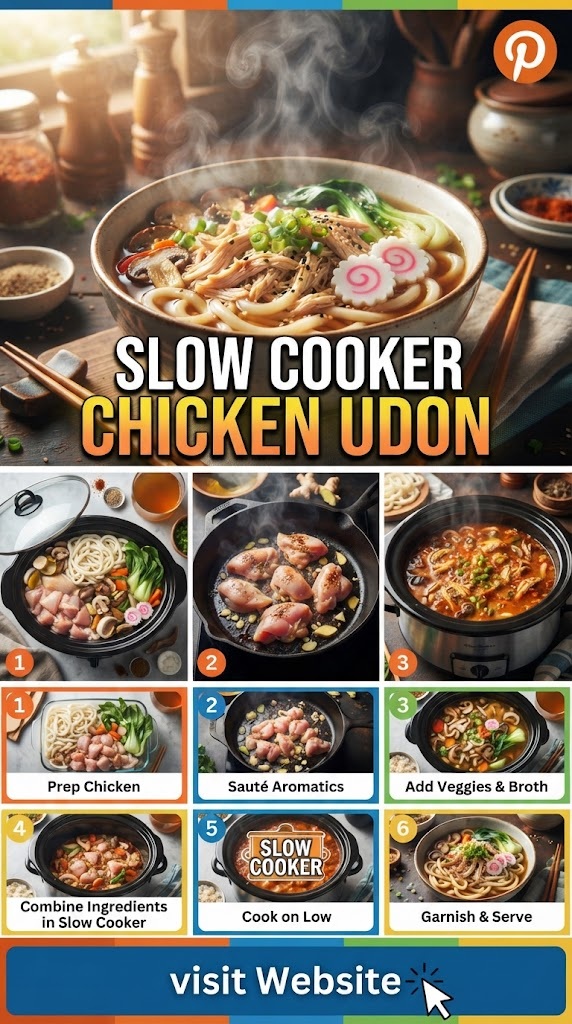
Slow Cooker Chicken Udon
There is something undeniably magical about walking into a home that smells like ginger, garlic, and simmering soy sauce. It’s an olfactory hug that promises a meal capable of washing away the stresses of a long day. In the world of Japanese cuisine, few dishes provide this level of visceral comfort as effectively as Chicken Udon (known as Tori Udon). Traditionally, this dish requires careful attention to a simmering pot on the stove, but we are flipping the script.
By enlisting the help of the humble slow cooker, you can transform simple ingredients into a restaurant-quality masterpiece with almost zero effort. This comprehensive guide will walk you through everything you need to know about crafting the perfect Slow Cooker Chicken Udon—from the science of the broth to the art of the noodle.
Why the Slow Cooker is the Secret to Perfect Chicken Udon
The slow cooker (or Crockpot) is often associated with heavy stews and pot roasts. However, it is an elite tool for Japanese-inspired soups. Here’s why:
- Depth of Flavor: The low-and-slow method allows the aromatics—ginger, garlic, and scallions—to fully infuse into the broth. Unlike a quick boil, slow cooking coaxes out the subtle sweetness of the mirin and the savory depth of the soy sauce.
- Tender Protein: Chicken thighs, which are the preferred cut for this dish, contain connective tissue that breaks down over several hours. In a slow cooker, the chicken becomes so tender it practically melts into the noodles.
- Convenience for Busy Lifestyles: You can set the base in the morning, go to work or run errands, and return to a base that only needs a five-minute finish.
- Broth Clarity: Because the liquid never reaches a violent, rolling boil, the broth remains clearer and more refined than stove-top versions, mimicking the clarity found in high-end udon shops.
Understanding the Anatomy of Udon
Before we dive into the recipe, it is essential to understand what makes Udon unique. Udon are thick, chewy, wheat-based noodles that are a staple of Japanese comfort cooking. They are prized for their “mochi-mochi” texture—a Japanese term used to describe something that is bouncy, chewy, and satisfying.
Unlike ramen noodles, which are thin and alkaline, or soba noodles, which are nutty and made from buckwheat, udon is neutral in flavor. This makes them the perfect canvas for a rich, savory broth.
The Three Types of Udon Noodles:
- Frozen Udon (Sanuki Style): Generally considered the gold standard for home cooks. They are flash-frozen at the peak of freshness, preserving their bouncy texture.
- Fresh/Vacuum-Packed Udon: Found in the refrigerated section. These are convenient but can sometimes be a bit more fragile than frozen ones.
- Dried Udon: These resemble thick linguine. While they have a long shelf life, they lack the characteristic “chew” of fresh or frozen varieties. If using these in a slow cooker recipe, they must be boiled separately before adding.
Essential Ingredients: The Building Blocks of Flavor
To achieve a “Google-ranked” level of deliciousness, you need high-quality ingredients. Let’s break down the components of the ultimate Slow Cooker Chicken Udon.
1. The Protein: Chicken Thighs vs. Breasts
For a slow cooker, boneless, skinless chicken thighs are non-negotiable. Chicken breasts tend to become stringy and dry when cooked for more than four hours. Thighs, however, remain juicy and succulent. For an even deeper flavor, you can use bone-in thighs and remove the bones before serving.
2. The Aromatics
- Fresh Ginger: Grate it or slice it into matchsticks. It provides a sharp, warming heat.
- Garlic: Use fresh cloves, smashed or minced.
- Green Onions (Scallions): Use the white parts for the slow cooker base and save the green parts for a fresh garnish.
3. The Liquid Gold (The Broth)
A traditional udon broth is called Kakejiru. It is typically made from:
- Dashi: A Japanese soup stock made from kombu (dried kelp) and katsuobushi (dried bonito flakes). You can use instant dashi granules for convenience.
- Soy Sauce: Use a high-quality Japanese soy sauce (like Kikkoman). For a lighter color but saltier taste, use Usukuchi (light soy sauce).
- Mirin: A Japanese sweet rice wine that adds luster and a subtle sweetness.
- Optional: Sake: Adds a sophisticated depth and helps tenderize the chicken.
4. The Vegetables
While the chicken and noodles are the stars, vegetables add texture and nutrients:
- Shiitake Mushrooms: These add a massive “umami” punch.
- Bok Choy or Spinach: Added at the very end to maintain their vibrant green color.
- Carrots: Sliced into coins or matchsticks for a touch of sweetness.
The Master Recipe: Slow Cooker Chicken Udon
This recipe serves 4 to 6 people and requires approximately 15 minutes of prep time.
Ingredients List:
- 1.5 lbs Boneless, skinless chicken thighs, cut into bite-sized pieces.
- 6 cups Chicken broth (low sodium) OR 6 cups water mixed with 2 tbsp Dashi powder.
- 1/4 cup Soy sauce.
- 2 tbsp Mirin.
- 1 tbsp Brown sugar or honey (optional, for balance).
- 1 tbsp Fresh ginger, grated.
- 3 cloves Garlic, minced.
- 1 cup Shiitake mushrooms, sliced.
- 2 medium carrots, julienned.
- 4-6 portions of Frozen Udon noodles.
- 2 cups Baby bok choy or spinach.
- Garnishes: Sliced green onions, toasted sesame seeds, Shichimi Togarashi (Japanese seven-spice), or a soft-boiled egg.
Step-by-Step Instructions:
Step 1: Prep the Base
In your slow cooker, combine the chicken broth (or dashi), soy sauce, mirin, brown sugar, ginger, and garlic. Stir well to ensure the sugar is dissolved.
Step 2: Add Protein and Hard Veggies
Place the chicken pieces, sliced shiitake mushrooms, and carrots into the liquid. Ensure the chicken is mostly submerged.
Step 3: The Slow Cook
Cover and cook on LOW for 5 to 6 hours or on HIGH for 3 hours. You want the chicken to be tender enough that it yields easily to a fork.
Pro Tip: If you have the time, sear the chicken in a pan with a teaspoon of oil before adding it to the slow cooker. This “Maillard reaction” creates a deeper, caramelized flavor profile.
Step 4: The Noodle Phase
About 15-20 minutes before you are ready to serve, turn the slow cooker to the HIGH setting (if it wasn’t already). Add the frozen udon noodles directly into the broth. You do not need to thaw them.
Note: If using dried noodles, cook them in a separate pot of boiling water according to package directions, drain, and add them to the bowls just before serving. Adding dried noodles directly to the slow cooker can result in a gummy broth.
Step 5: The Final Greens
Once the noodles have loosened and are tender (usually 5-10 minutes), stir in the bok choy or spinach. The residual heat will wilt the greens in about 2 minutes, preserving their crunch and color.
Step 6: Adjust Seasoning
Taste the broth. Does it need more salt? Add a splash of soy sauce. Is it too salty? Add a splash of hot water. Does it need more “zip”? Add a squeeze of lime or a drop of sesame oil.
Pro Tips for the Best Results
1. The “Noodle Timing” Rule
The most common mistake in slow cooker udon is adding the noodles too early. Udon noodles are already cooked; you are simply reheating them and allowing them to absorb a bit of broth. If they sit in the slow cooker for hours, they will turn into mush. Always add them in the final 10-15 minutes.
2. Boosting the Umami
If you want that “restaurant” flavor, don’t skip the dashi. If you can’t find dashi, a tablespoon of fish sauce or a teaspoon of Worcestershire sauce can act as a western substitute to provide that savory backbone.
3. Controlling the Fat
Chicken thighs can release some fat. If you prefer a leaner broth, you can use a spoon to skim the fat off the surface of the liquid before adding the noodles. Alternatively, cook the broth the day before, refrigerate it, and lift the hardened fat off the top the next morning.
Variations and Substitutions
One of the best things about Chicken Udon is its versatility. Here are some popular variations to suit different dietary needs or flavor preferences:
Spicy Chicken Udon
Love heat? Add 1 tablespoon of Gochujang (Korean chili paste) or Chili Garlic Sauce to the broth at the beginning. Garnish with plenty of Shichimi Togarashi and sliced jalapeños.
Miso Chicken Udon
For a creamier, fermented depth, whisk 2-3 tablespoons of White Miso paste into a small bowl of hot broth at the very end, then pour it back into the slow cooker. Crucial: Never boil miso, as it kills the healthy probiotics and changes the flavor.
Gluten-Free Udon
Standard udon is made of wheat. For a gluten-free version, swap the udon for thick rice noodles (like those used in Pho) and ensure you use Tamari instead of soy sauce.
Vegetarian/Vegan Swap
Replace the chicken with thick slabs of fried tofu (Aburaage) or extra-firm tofu cubes. Use a kelp-only dashi (Kombu Dashi) and vegetable broth instead of chicken broth.
Health Benefits: Is Chicken Udon Good for You?
Chicken Udon is a powerhouse of nutrition, especially when prepared in a slow cooker where nutrients are preserved in the broth rather than discarded.
- Hydration: The high liquid content helps with hydration.
- Ginger and Garlic: Both are renowned for their anti-inflammatory properties and immune-boosting benefits—perfect for cold and flu season.
- Lean Protein: Chicken provides the essential amino acids needed for muscle repair.
- Low Fat: Unlike creamy pasta dishes or fried foods, this soup is relatively low in fat while remaining incredibly filling.
- Gut Health: If you add miso or use a high-quality dashi, you are incorporating minerals and compounds that support digestion.
The Art of Garnish: Taking it to the Next Level
A bowl of udon without garnishes is like a house without furniture. Garnishes provide the texture and “pop” that make the dish exciting.
- Soft-Boiled Egg (Ajitsuke Tamago): A jammy yolk adds richness to the broth.
- Narutomaki: The iconic white and pink swirled fish cake. It adds a traditional aesthetic and a mild seafood flavor.
- Tenkasu: These are small bits of fried tempura batter. They add a delightful crunch that contrasts with the soft noodles.
- Nori: Small strips of dried seaweed provide a salty, oceanic crunch.
- Pickled Ginger: Cleanses the palate between bites.
Meal Prep and Storage Instructions
Storing Leftovers
If you plan on having leftovers, store the broth/chicken and the noodles in separate containers. If the noodles sit in the broth overnight, they will absorb all the liquid and become bloated.
- Fridge: Broth stays fresh for up to 4 days. Noodles stay fresh for 2-3 days.
- Freezer: You can freeze the broth and chicken base for up to 3 months. However, frozen udon noodles do not refreeze well once cooked.
Reheating
The best way to reheat is on the stovetop. Bring the broth to a simmer, then drop the noodles in just long enough to warm through. If using a microwave, heat the broth first until boiling, then add the noodles and heat for another 30 seconds.
Frequently Asked Questions (FAQs)
Can I use frozen chicken?
Yes, you can use frozen chicken thighs in a slow cooker, but it is generally recommended to thaw them first to ensure they reach a safe internal temperature quickly enough. If you do use frozen chicken, add an extra hour to the cooking time on the “Low” setting.
My broth is too salty, what do I do?
Slow cooking concentrates flavors as some steam escapes and the liquid reduces. If it’s too salty, add half a cup of water or unsalted chicken stock at a time until the balance is restored. A splash of rice vinegar can also help cut through the saltiness.
What is the difference between Udon and Soba?
Udon is thick, white, and made from wheat flour. Soba is thin, brownish-grey, and made from buckwheat flour. Soba has a much earthier flavor and is often served cold, whereas Udon is the king of hot soups.
Can I make this in an Instant Pot?
Absolutely! If using an Instant Pot, use the “Sauté” function to sear the chicken and aromatics, then “Pressure Cook” on high for 10 minutes with a natural release. Add the frozen noodles at the end using the “Sauté” function for 3-5 minutes until they are tender.
Common Mistakes to Avoid
- Overcooking the Veggies: If you put delicate vegetables like spinach or peas in at the start, they will disintegrate. Always save them for the “last 5 minutes” rule.
- Using Chicken Breasts: As mentioned, they just don’t have the fat content to survive a 6-hour slow cook without becoming dry. Stick to thighs.
- Low-Quality Soy Sauce: Since soy sauce is a primary flavor component, using a generic “grocery store” brand that is mostly caramel color and salt can ruin the dish. Invest in a naturally brewed Japanese brand.
- Not Rinsing the Noodles: If you use vacuum-packed noodles, they sometimes have a slightly acidic preservative on them. Give them a quick rinse under cold water before dropping them into the slow cooker to ensure a clean flavor.
Why Slow Cooker Chicken Udon is the Ultimate Family Meal
In the modern household, finding a meal that satisfies both children and adults can be a challenge. Chicken Udon is the perfect solution. Children love the “slurpable” nature of the thick noodles and the mild, slightly sweet broth. Adults appreciate the complexity of the ginger and the nutritional profile of a home-cooked soup.
Moreover, it’s a “one-pot” wonder. Aside from maybe a cutting board and a knife, the slow cooker does all the heavy lifting. This means fewer dishes and more time to spend with your family or simply decompressing.
Pairing Suggestions: What to Serve with Chicken Udon
While a big bowl of udon is a complete meal on its own, you can elevate the experience with these side dishes:
- Edamame: Steamed soybeans with sea salt are a light and healthy appetizer.
- Gyoza: Pan-fried Japanese dumplings provide a crispy contrast to the soft noodles.
- Cucumber Salad (Sunomono): A vinegary cucumber salad provides a refreshing acidity that cuts through the savory broth.
- Green Tea: A hot cup of Sencha or Genmaicha (popcorn tea) is the traditional way to end a Japanese meal.
Conclusion: Embrace the Slow Life
The Slow Cooker Chicken Udon is more than just a recipe; it’s a testament to the idea that great food doesn’t always require hours of active labor. By understanding the balance of umami, the importance of noodle texture, and the benefits of low-and-slow heat, you can create a dish that rivals any ramen or udon house in the city.
Whether you’re looking for a way to warm up on a snowy winter evening or you need a reliable meal-prep option for a busy work week, this dish delivers on every front. It is nourishing, flavorful, and incredibly satisfying. So, dust off your slow cooker, head to your local Asian grocer for some frozen Sanuki udon, and get ready to experience the ultimate Japanese comfort food in the comfort of your own kitchen.
Final Checklist for Success:
- Chicken Thighs? Checked.
- Frozen Udon? Checked.
- Dashi or high-quality broth? Checked.
- Aromatics (Ginger/Garlic)? Checked.
- Patience for the 6-hour simmer? Checked.
Your journey to the perfect bowl of Slow Cooker Chicken Udon starts now. Happy cooking—and even happier slurping!