
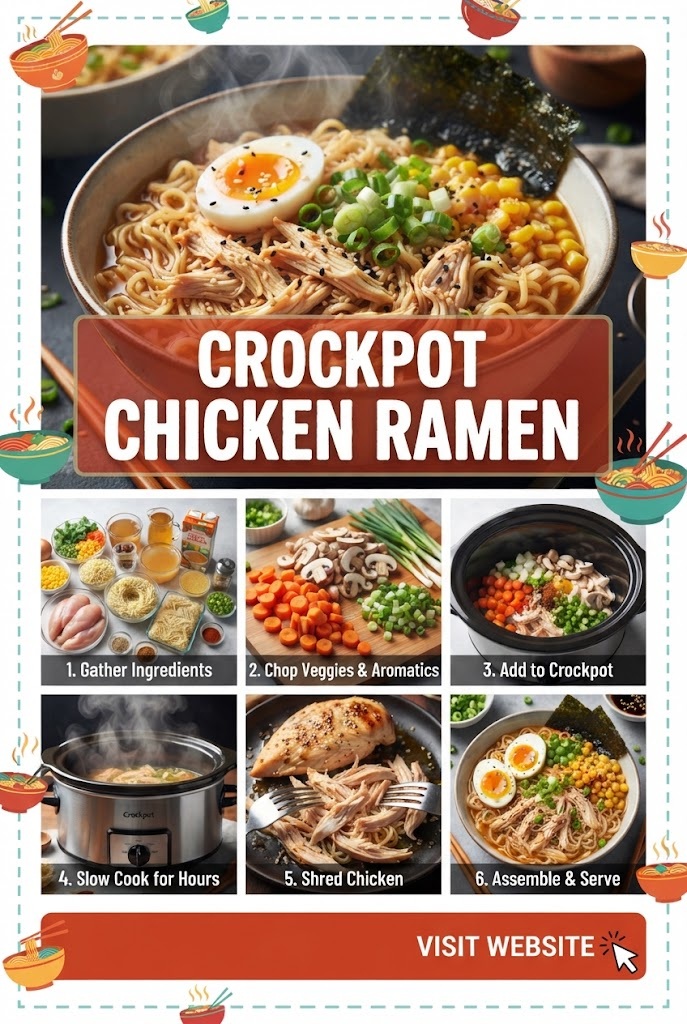
Crockpot Chicken Ramen
In the world of comfort food, few dishes hold the same universal appeal as a steaming bowl of ramen. It is a symphony of flavors—salty, savory, umami-rich, and deeply satisfying. Traditionally, authentic ramen broth can take upwards of 24 to 48 hours to simmer on a stovetop, requiring constant monitoring and a master’s touch. But what if you could achieve that same depth of flavor, that collagen-rich mouthfeel, and that soul-warming experience using your most trusted kitchen appliance?
Enter Crockpot Chicken Ramen. This isn’t just a “hack”; it is a culinary evolution for the modern, busy home cook. By leveraging the low-and-slow heat of a slow cooker, you can transform humble ingredients like chicken thighs, ginger, and garlic into a restaurant-quality masterpiece.
In this comprehensive guide, we will explore everything you need to know about making the perfect Crockpot Chicken Ramen, from selecting the right noodles to mastering the art of the marinated “6-minute” egg.
Why the Crockpot is the Secret to Better Ramen
Before we dive into the ingredients, let’s discuss the “why.” Traditional ramen shops (Ramen-ya) use massive vats to boil bones down until they release their marrow and collagen. This creates the “body” of the soup.
When you use a Crockpot (Slow Cooker), you are mimicking this process through extended extraction time. Because the Crockpot maintains a consistent, low temperature, the chicken doesn’t become tough or rubbery; instead, it breaks down into tender, succulent shreds while simultaneously infusing the broth with its natural juices.
Benefits of the Slow Cooker Method:
- Hands-Off Cooking: Set it in the morning and come home to a house that smells like a Tokyo noodle shop.
- Depth of Flavor: The long simmer allows aromatics like star anise, ginger, and scallions to fully permeate the liquid.
- Tenderness: Chicken thighs specifically benefit from the moist environment of the slow cooker, resulting in meat that melts in your mouth.
- Cost-Effective: You can use affordable cuts of meat and pantry staples to feed a whole family for a fraction of the price of a restaurant visit.
The Anatomy of the Perfect Broth: The Foundation
A great bowl of ramen is judged first and foremost by its broth. In the world of Crockpot Chicken Ramen, we are aiming for a hybrid style—part Shoyu (soy sauce-based) and part Tori Paitan (creamy chicken broth).
The Essential Liquid Base
To get started, you need a high-quality base. While you can use water, using a low-sodium chicken stock or bone broth provides a head start on flavor.
The Aromatics (The “Holy Trinity” and Beyond)
- Ginger: Use fresh ginger root, sliced into coins. It provides a sharp, peppery heat that cuts through the richness of the chicken.
- Garlic: Smash the cloves rather than mincing them. This allows them to release flavor slowly over several hours without burning.
- Green Onions (Scallions): Use the white and light green parts in the Crockpot, and save the dark green tops for a fresh garnish.
- Mushrooms: Dried shiitake mushrooms are a “cheat code” for umami. They add a woody, savory depth that fresh mushrooms simply can’t match.
The Umami Boosters
To move from “chicken soup” territory into “ramen” territory, you need traditional Japanese seasonings:
- Soy Sauce: Provides salt and the classic dark hue.
- Mirin: A sweet Japanese rice wine that balances the saltiness.
- Rice Vinegar: A splash adds a necessary brightness to wake up the heavy flavors.
- Sesame Oil: To be added at the end for its toasted, nutty aroma.
Choosing Your Protein: Why Chicken Thighs Reign Supreme
While chicken breast is often the go-to for healthy cooking, it is the enemy of the slow cooker when it comes to ramen.
The Case for Boneless, Skinless Chicken Thighs: Chicken thighs contain more connective tissue and fat than breasts. During a 4 to 8-hour cook cycle, this fat renders out into the broth, providing that signature “lip-smacking” quality. The meat remains juicy and can be easily shredded or sliced once the cooking is complete.
If you are looking for an even deeper flavor, use bone-in chicken thighs. The marrow from the bones will further enrich the broth, though you will need to be careful to remove all small bones before serving.
The Noodle Knowledge: Instant vs. Fresh vs. Specialty
The word “Ramen” actually refers to the noodles, not the soup. Traditional ramen noodles are made with wheat flour, salt, water, and kansui (an alkaline mineral water). It’s the kansui that gives the noodles their yellowish tint and springy texture.
1. Instant Noodles (The Budget Option)
We’ve all seen the 25-cent packets. If you use these, discard the flavor packet. The noodles themselves are deep-fried and cook in about 3 minutes. They are perfect for a quick weeknight meal.
2. Fresh Ramen Noodles
Found in the refrigerated section of Asian grocery stores (and some high-end supermarkets like Whole Foods), these are vastly superior. They have a chewiness that instant noodles lack.
3. Dried Chuka Soba
These look like straight spaghetti but are made with the same alkaline components as ramen. They are a great middle-ground between instant and fresh.
4. Gluten-Free Alternatives
If you are sensitive to gluten, brown rice ramen noodles or glass noodles (made from mung bean starch) work exceptionally well with this broth.
Step-by-Step Instructions for Crockpot Chicken Ramen
This recipe is designed for a 6-quart slow cooker and serves 4 to 6 people.
Ingredients List
For the Broth:
- 1.5 lbs boneless, skinless chicken thighs
- 6 cups low-sodium chicken broth
- 1/4 cup soy sauce (or liquid aminos)
- 1 tablespoon freshly grated ginger
- 4 cloves garlic, smashed
- 2 tablespoons mirin
- 1 tablespoon rice vinegar
- 1 tablespoon brown sugar (optional, for balance)
- 2-3 dried shiitake mushrooms
- 1 teaspoon chili paste (like Sambal Oelek) for a kick
To be added at the end:
- 2-3 packs of ramen noodles (discard seasoning)
- 2 cups fresh baby spinach or bok choy
- 1 tablespoon toasted sesame oil
The Cooking Process
- Sear the Chicken (Optional but Recommended): For maximum flavor, sear the chicken thighs in a skillet with a teaspoon of oil for 2-3 minutes per side until golden brown. This creates a Maillard reaction that adds complexity to the broth. If you’re in a rush, you can skip this and put them in raw.
- The Slow Cook: Place the chicken, broth, soy sauce, ginger, garlic, mirin, vinegar, sugar, and dried mushrooms into the Crockpot.
- Set the Time: Cook on LOW for 6-7 hours or on HIGH for 3-4 hours. The low setting is preferred for a more developed flavor.
- Shred the Meat: Once the time is up, remove the chicken thighs. Use two forks to shred the meat into bite-sized pieces. Remove the smashed garlic cloves and ginger coins if you prefer a smoother broth.
- The Noodle Phase: Turn the Crockpot to the HIGH setting. Add the dry noodles and the shredded chicken back into the liquid.
- The Greens: Toss in your spinach or chopped bok choy. These only need about 3-5 minutes to wilt in the hot liquid.
- Final Seasoning: Stir in the sesame oil. Taste the broth. Does it need more salt? Add a splash of soy sauce. Need more heat? Add more chili paste.
The Art of the Toppings: Customizing Your Bowl
The difference between a “good” bowl of ramen and a “legendary” one lies in the toppings. In Japan, toppings are not an afterthought; they are carefully chosen textures that complement the soup.
1. The Ramen Egg (Ajitsuke Tamago)
A classic ramen egg has a firm, seasoned white and a jammy, custard-like yolk.
- How to make it: Boil eggs for exactly 6 minutes and 30 seconds. Immediately plunge them into an ice bath. Once cool, peel and marinate them in a mixture of soy sauce, mirin, and water for at least 4 hours (or overnight). Slice in half before serving.
2. The Crunch
- Bean Sprouts: Add fresh mung bean sprouts for a watery, crisp contrast.
- Bamboo Shoots (Menma): These are fermented bamboo shoots found in cans or jars at Asian markets. They have a unique, earthy funk.
- Radishes: Thinly sliced red radishes add a peppery bite.
3. The Aromatics
- Green Onions: Thinly sliced on a bias.
- Nori: Small sheets of dried seaweed tucked into the side of the bowl. They soften in the broth and add a sea-salt umami.
- Corn: Sweet corn is a popular topping in Hokkaido-style ramen, especially when paired with a pat of butter.
4. The Heat
- Chili Oil (Rayu): Drizzle some over the top for a beautiful red swirl and a lingering heat.
- Sriracha: A classic American-fused addition.
- Shichimi Togarashi: A Japanese seven-spice blend containing chili flakes, orange peel, and sesame seeds.
Advanced Flavor Tips for the Ramen Enthusiast
If you want to take your Crockpot Chicken Ramen to the “Expert” level, consider these pro tips:
The “Aroma Oil” Secret
Restaurant ramen often has a layer of shimmering oil on top. This isn’t just fat; it’s flavored oil.
- Garlic Oil (Mayu): Fry minced garlic in neutral oil until it is almost black (but not burnt). Blend it into a paste and drizzle it over your finished bowl. It adds an incredible smoky depth.
Enhancing the Body
If you find your Crockpot broth feels a bit “thin” compared to restaurant versions, stir in a tablespoon of white miso paste at the very end. Do not boil the miso, as high heat destroys its delicate probiotic flavors. Simply whisk it into a small amount of warm broth first, then stir it into the pot.
The Power of Dashi
Instead of just chicken stock, use a combination of chicken stock and Dashi (Japanese soup stock made from kombu and bonito flakes). This introduces a “surf and turf” complexity that is the hallmark of authentic ramen.
Dietary Variations and Substitutions
Vegetarian Crockpot Ramen
You can easily adapt this recipe!
- The Broth: Use a rich vegetable stock and double the amount of dried shiitake mushrooms.
- The Protein: Replace chicken with cubes of extra-firm tofu or “meaty” king oyster mushrooms.
- The Umami: Use liquid aminos or tamari for a gluten-free, savory punch.
Gluten-Free Ramen
- Ensure your soy sauce is replaced with Tamari.
- Use certified gluten-free noodles (Millet and Brown Rice ramen is a fantastic substitute).
- Double-check that your mirin is pure and doesn’t contain wheat additives.
Low-Carb / Keto Ramen
- Replace the noodles with Zoodles (zucchini noodles) or Shirataki noodles (konjac noodles).
- Omit the brown sugar from the broth.
- Focus heavily on fatty toppings like soft-boiled eggs, pork belly slices, or a knob of butter.
Common Mistakes to Avoid
- Overcooking the Noodles: Never cook the noodles in the Crockpot for the full duration. They will turn into a mushy paste. Always add them in the last 5-10 minutes of cooking.
- Using Chicken Breasts for 8 Hours: As mentioned, they will become dry and stringy. If you must use breasts, reduce the cooking time to no more than 3-4 hours on LOW.
- Forgetting to Taste: Broth evaporates and flavors concentrate. Always taste your broth before serving and adjust the salt/acid balance.
- Not Rinsing Fresh Noodles: If using fresh noodles from a package, they are often coated in cornstarch to prevent sticking. Rinse them in cold water before adding them to the pot to prevent your broth from becoming too thick and cloudy.
Meal Prepping and Storage
Crockpot Chicken Ramen is a meal prepper’s dream, but there is a specific way to store it to maintain quality.
- Store Separately: Do not store the noodles in the broth. They will continue to soak up liquid until there is no soup left and the noodles are soggy.
- The Broth and Meat: These can be stored together in an airtight container in the fridge for up to 4 days or in the freezer for up to 3 months.
- Reheating: Reheat the broth on the stove until boiling, then drop in fresh noodles or pre-cooked noodles just to warm them through.
- The Toppings: Keep your toppings (eggs, sliced onions, sprouts) in separate small containers or bags to keep them fresh and crisp.
Nutritional Breakdown: Is Ramen Healthy?
Traditional instant ramen is often criticized for being high in sodium and preservatives. However, making it at home in a Crockpot changes the nutritional profile significantly.
- Protein-Rich: By using real chicken thighs, you are getting high-quality protein and essential amino acids.
- Controlled Sodium: You control the amount of soy sauce and salt. Using low-sodium broth reduces the salt content by nearly 50% compared to restaurant versions.
- Vegetable Power: By loading your bowl with spinach, bok choy, mushrooms, and sprouts, you are adding fiber, Vitamin A, Vitamin K, and antioxidants.
- Ginger and Garlic: Both have well-documented anti-inflammatory and immune-boosting properties.
The Cultural Context: A Brief History of Ramen
While we enjoy our Crockpot version today, it’s important to respect the origins of this dish. Ramen originated in China and was introduced to Japan in the late 19th or early 20th century. It was originally called “Shina Soba” (Chinese noodles).
After World War II, ramen became a staple in Japan due to the availability of wheat flour. It evolved into various regional styles:
- Sapporo: Famous for Miso Ramen.
- Tokyo: Known for Shoyu (Soy Sauce) Ramen.
- Kyushu: Famous for Tonkotsu (Pork Bone) Ramen.
Our Crockpot Chicken Ramen is a tribute to this history, blending traditional Japanese flavor profiles with the Western convenience of slow cooking.
Frequently Asked Questions (FAQs)
Q: Can I use frozen chicken? A: It is generally safer to thaw chicken before putting it in a slow cooker to ensure it reaches a safe internal temperature quickly enough. However, if you are cooking on HIGH for a long duration, some modern Crockpots can handle frozen meat—just ensure the internal temp reaches 165°F.
Q: My broth is too salty, what should I do? A: Don’t panic! Add a cup of water or unsalted broth. Alternatively, a squeeze of lime juice or a little more rice vinegar can help “mask” the saltiness by balancing it with acidity.
Q: What if I don’t have a Crockpot? A: You can make this in a heavy-bottomed Dutch oven on the stove. Simmer on the lowest possible heat for 2-3 hours, keeping the lid on to prevent too much evaporation.
Q: Can I add coconut milk? A: Yes! If you want a Thai-inspired “Khao Soi” style ramen, adding a can of full-fat coconut milk in the last 30 minutes makes the broth incredibly creamy and rich.
Conclusion: The Ultimate Weeknight Hero
Crockpot Chicken Ramen proves that you don’t need to be a professional chef or spend days hovering over a stove to enjoy a complex, deeply flavorful meal. It is a dish that rewards patience but requires very little actual labor.
Whether you are looking to impress guests at a dinner party or simply want a cozy meal to curl up with on a rainy Tuesday, this recipe is your roadmap to success. By focusing on quality ingredients—juicy chicken thighs, aromatic ginger, and the perfect “jammy” egg—you can elevate the humble noodle into an extraordinary culinary experience.
So, dust off your slow cooker, head to the market for some fresh ginger and scallions, and prepare to fall in love with the easiest, most delicious ramen you’ve ever had. Your kitchen is about to become the best ramen shop in town.