Slow Cooker Chicken Noodle (Classic)
There is perhaps no dish more synonymous with comfort, healing, and home than a steaming bowl of classic chicken noodle soup. It is the culinary equivalent of a warm blanket on a rainy afternoon, the “Jewish Penicillin” that wards off the common cold, and the nostalgic centerpiece of childhood Sunday dinners. When you combine this timeless recipe with the “set-it-and-forget-it” convenience of a slow cooker, you transform a labor-intensive kitchen task into an effortless ritual.
This comprehensive guide dives deep into the art and science of creating the perfect Slow Cooker Chicken Noodle Soup. From selecting the right cut of poultry to mastering the delicate timing of the noodles, we will explore every facet of this legendary dish to ensure your next batch is nothing short of extraordinary.
The Soul of the Soup: Why the Slow Cooker Wins
While a stovetop simmer has its merits, the slow cooker (or Crockpot) offers unique advantages for chicken noodle soup that are hard to replicate. The gentle, consistent heat of a slow cooker allows the connective tissues in the chicken to break down slowly, resulting in meat that is incredibly tender and “fall-apart” soft. Furthermore, the enclosed environment prevents evaporation, ensuring that every drop of nutrient-rich broth stays in the pot, concentrating the flavors of the vegetables and herbs over several hours.
In our fast-paced modern world, the ability to prep a meal in fifteen minutes in the morning and return home to a house filled with the aroma of simmering celery, onions, and sage is a luxury that never goes out of style.
Anatomy of the Perfect Ingredients
To achieve a five-star result, you must start with high-quality components. Every ingredient in a slow cooker chicken noodle soup has a specific role to play.
1. The Chicken: Thighs vs. Breasts
The debate over which cut of chicken is best for the slow cooker is long-standing.
- Chicken Thighs (Recommended): Dark meat is much more forgiving in a slow cooker. The higher fat content prevents the meat from drying out during a 6-to-8-hour cook cycle. Thighs yield a richer, more flavorful broth.
- Chicken Breasts: While leaner and lower in calories, white meat can become “stringy” or dry if left in the slow cooker for too long. If using breasts, it is vital to monitor the internal temperature and perhaps reduce the cooking time.
- Bone-in vs. Boneless: If you have the time, using bone-in, skinless chicken provides an added boost of collagen and minerals to your broth, giving it a silkier mouthfeel.
2. The Mirepoix: The Flavor Foundation
The French term “mirepoix” refers to the holy trinity of aromatics: onions, carrots, and celery.
- Onions: Yellow or white onions provide a sweet, foundational depth.
- Carrots: They add color and a subtle earthy sweetness.
- Celery: Provides a necessary savory saltiness and aromatic lift.
- Garlic: Never skimp on the garlic. Freshly minced cloves release essential oils that permeate the broth far better than powdered versions.
3. The Liquid Gold: Broth and Stock
Since the liquid is the medium through which all flavors travel, your choice of base is critical.
- Low-Sodium Chicken Broth: This allows you to control the salt level of the final dish.
- Bone Broth: For a protein punch and a deeper, more viscous soup.
- Water + Better Than Bouillon: Many home chefs swear by this combination for a punchy, consistent flavor.
4. The Herbs: Fresh vs. Dried
Slow cooking can dampen the brightness of fresh herbs if added too early.
- Dried Herbs (Add at start): Thyme, rosemary, and bay leaves are hardy and benefit from the long extraction process.
- Fresh Herbs (Add at finish): Parsley, dill, or chives should be stirred in just before serving to provide a pop of color and a fresh, herbaceous finish.
Step-by-Step Instructions for the Classic Slow Cooker Chicken Noodle Soup
This recipe focuses on the traditional flavor profile that has graced American dinner tables for generations.
Ingredients List
- 1.5 lbs Boneless, skinless chicken thighs (or breasts)
- 1 large yellow onion, diced
- 3 large carrots, peeled and sliced into rounds
- 3 stalks celery, sliced
- 4 cloves garlic, minced
- 1 tsp dried thyme
- 1 tsp dried rosemary (crushed)
- 1-2 bay leaves
- 1/2 tsp black pepper
- 1 tsp kosher salt (adjust to taste)
- 6-8 cups high-quality chicken broth
- 8 oz wide egg noodles
- 1 tbsp fresh lemon juice (the secret ingredient!)
- 1/4 cup fresh parsley, chopped
The Execution
Phase 1: The Layering
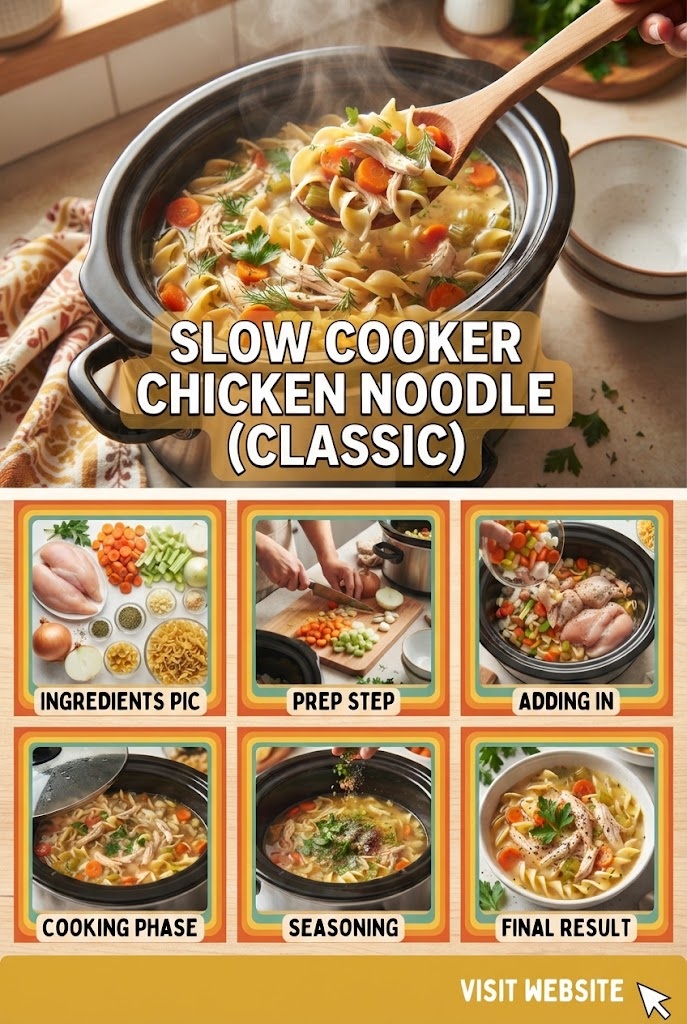
Place the diced onions, carrots, and celery at the bottom of the slow cooker. This creates a “rack” for the chicken to sit on and ensures the vegetables are in the hottest part of the pot (near the heating element). Place the chicken pieces on top of the vegetables.
Phase 2: Seasoning
Sprinkle the salt, pepper, thyme, and rosemary over the chicken. Toss in the minced garlic and the bay leaves. Pour the chicken broth over everything until the ingredients are submerged by at least two inches of liquid.
Phase 3: The Slow Simmer
Cover and cook on LOW for 6 to 8 hours or on HIGH for 3 to 4 hours. For the best texture, the “low” setting is almost always superior, as it prevents the proteins in the chicken from tightening up too quickly.
Phase 4: Shredding the Chicken
Once the cook time is complete, carefully remove the chicken pieces and place them on a cutting board. Using two forks, shred the chicken into bite-sized pieces. Discard any excess fat or connective tissue. Return the shredded chicken to the pot.
Phase 5: The Noodle Strategy
This is where many slow cooker recipes go wrong. Never add your noodles at the beginning of the day. They will turn into a gummy, disintegrated mess.
- Turn the slow cooker to HIGH.
- Add the wide egg noodles.
- Cover and cook for another 20–30 minutes, or until the noodles are al dente.
Phase 6: The Finishing Touches
Turn off the heat. Remove the bay leaves. Stir in the fresh parsley and the lemon juice. The acidity of the lemon juice acts as a flavor “brightener,” cutting through the richness of the broth and making all the other flavors sing. Taste and add more salt or pepper if necessary.
The Science of the Noodle: Choosing Your Pasta
The noodle is the namesake of the dish, yet it is often the most misunderstood component. In a classic American chicken noodle soup, the Wide Egg Noodle is king. These noodles are made with a higher proportion of eggs to wheat, giving them a sturdy texture and a yellow hue.
Alternative Options:
- Ditalini or Orzo: These small pasta shapes are excellent for a “spoonable” soup where you want a bit of pasta in every bite.
- Homemade Flour Noodles: If you want to go the extra mile, thick, hand-rolled flour noodles (similar to those found in Amish cooking) hold up incredibly well in the slow cooker and thicken the broth naturally with their starch.
- Gluten-Free Options: Use a high-quality brown rice noodle, but be warned: gluten-free pasta breaks down much faster. It is often better to boil these separately on the stove and add them to individual bowls.
Expert Tips for a Better Broth
If you want to move from a “good” soup to a “legendary” soup, consider these professional-level tips:
The “Sauté” Shortcut
While the appeal of the slow cooker is the lack of prep, taking 5 minutes to sauté your onions, carrots, and celery in a pan with a little butter before adding them to the pot creates a “Maillard reaction.” This browning adds a complex sweetness that raw vegetables cannot provide.
The Parmesan Rind
Do not throw away the hard end of your Parmesan cheese blocks. Drop a rind into the slow cooker at the beginning. As it simmers, it releases glutamates (natural MSG), which provide a massive umami boost to the broth without making the soup taste like cheese.
Searing the Chicken
If using chicken thighs with skin, sear them skin-side down in a skillet until golden brown before placing them in the slow cooker. This adds a roasted depth to the soup’s profile.
Controlling the Starch
If you prefer a clear, thin broth, boil your noodles separately on the stove and add them to the bowls before pouring the soup over them. If you prefer a thicker, heartier, “stew-like” soup, cook the noodles directly in the pot; the starch they release will naturally thicken the liquid.
Nutritional Benefits: More Than Just Comfort
There is scientific backing to the claim that chicken noodle soup is good for the soul and the body.
- Hydration: The broth provides essential fluids and electrolytes (sodium), which are crucial when fighting off a fever or dehydration.
- Anti-Inflammatory Properties: Studies have suggested that chicken soup may inhibit the migration of neutrophils—white blood cells that participate in the body’s inflammatory response—potentially easing the symptoms of upper respiratory infections.
- Vitamins and Minerals: Carrots provide Vitamin A (beta-carotene), while celery and onions offer Vitamin C and antioxidants.
- Protein for Recovery: The easily digestible protein in shredded chicken helps the body repair tissues.
Troubleshooting Common Issues
My soup is too salty!
This often happens if you use standard broth and then add salt later. To fix this, you can add a peeled, halved potato to the pot and simmer for 20 minutes; the potato will absorb some of the excess salt. Alternatively, dilute the soup with a bit of water or unsalted stock.
My soup is bland.
Blandness usually stems from a lack of acidity or a lack of salt. Add a teaspoon of salt first. If that doesn’t work, add a splash of apple cider vinegar or more lemon juice. Acidity “wakes up” the taste buds.
The noodles absorbed all the broth!
Noodles are like sponges. If you leave the soup in the fridge overnight, the noodles will continue to swell. When reheating, you will likely need to add an extra cup or two of broth to bring it back to a “soupy” consistency.
Storage, Freezing, and Meal Prep
Chicken noodle soup is the ultimate meal prep candidate, but it requires a specific strategy.
In the Refrigerator
The soup will stay fresh in an airtight container for up to 4 days. As mentioned, the noodles will soften and absorb liquid over time.
In the Freezer
Pro Tip: If you plan on freezing the soup, freeze it without the noodles. Cook the soup base (chicken, broth, veggies) and freeze it in gallon-sized bags or containers. When you are ready to eat, defrost the base, bring it to a boil on the stove, and drop in fresh noodles. Freezing cooked noodles usually results in a mushy, unappealing texture upon thawing.
Creative Variations to the Classic Recipe
While the classic version is iconic, the slow cooker is a versatile vessel for experimentation.
1. Creamy Slow Cooker Chicken Noodle
For a richer version, stir in 1/2 cup of heavy cream or a block of cream cheese during the last 30 minutes of cooking. This creates a “Chowder-style” soup that is incredibly decadent.
2. The Spicy Kick
Add a diced jalapeño to the mirepoix and a teaspoon of red chili flakes. The slow heat extraction makes for a spicy broth that is perfect for clearing out sinuses.
3. Lemon Ginger Chicken Soup
Add 2 inches of sliced fresh ginger and extra lemon zest. This version is particularly effective for soothing upset stomachs and providing a bright, Asian-inspired twist on the classic.
4. The “Veggie Loaded” Version
Add frozen peas, chopped kale, or spinach in the last 10 minutes of cooking. It’s an easy way to increase fiber and micronutrient intake without changing the core flavor of the soup.
Frequently Asked Questions (FAQs)
Can I put frozen chicken in the slow cooker?
While some people do it, the USDA recommends thawing chicken before putting it in a slow cooker. Because a slow cooker heats up slowly, frozen meat may stay in the “danger zone” (40°F – 140°F) for too long, allowing bacteria to multiply. For safety and the best texture, always thaw your chicken first.
How do I keep the noodles from getting mushy?
The secret is timing. Only add the noodles during the final 20–30 minutes of the “High” setting. If you are serving the soup at a party where it will sit on the “Warm” setting for hours, it is best to cook the noodles separately and let guests add them to their bowls.
Can I use a whole chicken?
Yes! A small whole chicken (3–4 lbs) can be placed in a large slow cooker. Once cooked, remove the chicken, discard the skin and bones, and shred the meat. This produces an incredibly rich broth because of the bones.
What is the best side dish for chicken noodle soup?
You can’t go wrong with:
- Crusty Sourdough Bread: Perfect for dipping and soaking up the broth.
- Saltine Crackers: The nostalgic choice for a true “sick day” meal.
- A Simple Green Salad: To provide a crisp, fresh contrast to the warm soup.
- Grilled Cheese Sandwich: For the ultimate comfort food pairing.
The Cultural Significance of Chicken Noodle Soup
Beyond the ingredients and the cooking methods, chicken noodle soup holds a unique place in the global culinary landscape. Almost every culture has a version of this dish. In Mexico, it’s Caldo de Pollo with lime and avocado; in Vietnam, it’s Chicken Pho with star anise and rice noodles; in Jewish culture, it’s the “Golden Broth” served with matzo balls.
The American version we make in our slow cookers today is a melting pot of these traditions—combining the hearty noodles of German and Eastern European immigrants with the local produce of the Americas. It is a dish that transcends social status and age, proving that sometimes, the simplest things are the most profound.
Conclusion: Making Memories One Bowl at a Time
The Classic Slow Cooker Chicken Noodle Soup is more than just a recipe; it’s a tool for caretaking. Whether you are prepping it for a busy work week, delivering a pot to a neighbor who is under the weather, or teaching your children the basics of home cooking, this dish represents the heart of the home.
By following the tips in this guide—choosing thighs over breasts, timing your noodles perfectly, and adding that final splash of lemon—you aren’t just making a meal. You are mastering a craft. So, dust off your slow cooker, chop those carrots, and get ready to enjoy the most comforting bowl of soup you’ve ever tasted.
Final Recipe Summary Table
| Step | Action | Timing | Key Tip |
|---|---|---|---|
| Prep | Chop veggies, season chicken | 15 Mins | Use fresh garlic for best aroma. |
| Cook | Low heat simmer | 6-8 Hours | Don’t open the lid; it releases heat! |
| Shred | Remove & shred chicken | 5 Mins | Two forks make quick work of thighs. |
| Noodles | Add egg noodles on High | 20-30 Mins | Check for “al dente” texture. |
| Finish | Add lemon and parsley | 1 Min | Acidity is the secret to a professional taste. |
Variations and Substitutions Reference
- No Chicken Thighs? Use a rotisserie chicken. Shred it and add it at the very end with the noodles.
- No Egg Noodles? Use thick-cut fettuccine broken into pieces.
- Low Carb? Replace noodles with zucchini noodles (zoodles) or extra cauliflower florets added in the last 15 minutes.
- Vegetarian Option? Use vegetable broth and replace chicken with chickpeas or a “soy-based” chicken substitute (though the cooking time for the substitute will be much shorter).
Making Your Own Broth (The Advanced Method)
If you have an extra day, you can use your slow cooker to make the broth from scratch before you even start the soup.
- Place a chicken carcass (from a roasted chicken) in the slow cooker.
- Add scraps of onions, carrots, and celery.
- Cover with water and a tablespoon of apple cider vinegar.
- Cook on low for 12–24 hours.
- Strain the liquid. This “Liquid Gold” will provide a depth of flavor that no store-bought carton can match, taking your Classic Slow Cooker Chicken Noodle Soup to a level of culinary excellence that will have your family asking for seconds and thirds.
The Role of Salt in Slow Cooking
Salt behaves differently in a slow cooker than it does on a stove. Because there is very little evaporation, the salt doesn’t concentrate as much as it does in a simmering pot. However, the flavors of the vegetables intensify. It is always best to salt lightly at the beginning and perform a final “seasoning check” right before serving. Use Kosher salt for a cleaner taste, or Sea Salt for added minerals.
Final Thoughts on the Slow Cooker
The slow cooker is often dismissed as a tool for “lazy” cooking, but when used with intention, it is a sophisticated culinary instrument. For a dish like Chicken Noodle Soup, where the goal is the gentle extraction of flavor and the preservation of moisture, it is the ideal choice. By respecting the ingredients and following the chronological steps of adding aromatics, proteins, and starches, you create a harmonious dish that tastes like it was tended to by a professional chef all day long.
Enjoy your journey into the heart of comfort food. Your perfect bowl of Classic Slow Cooker Chicken Noodle Soup is just a few hours away.