
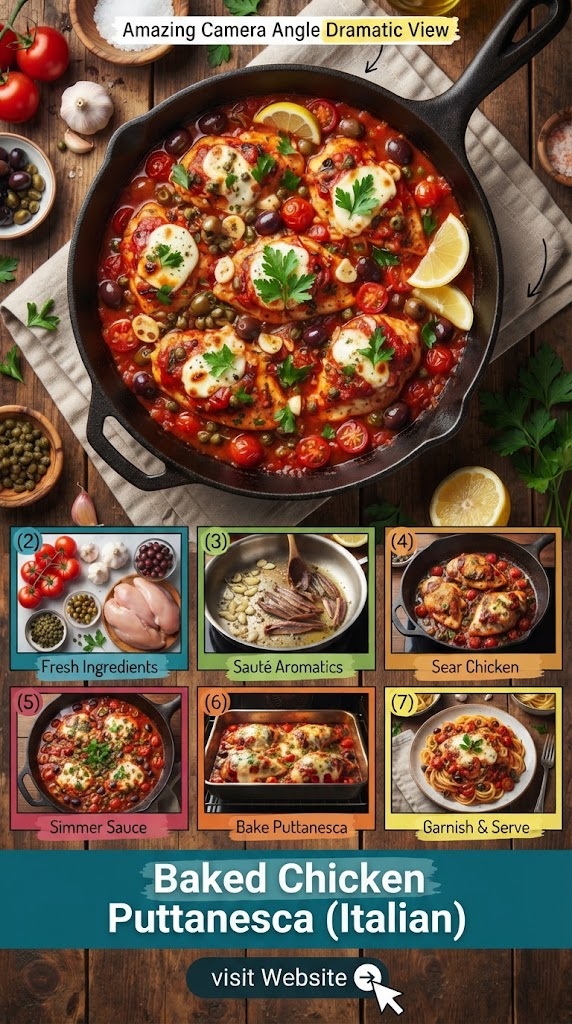
Baked Chicken Puttanesca (Italian)
Baked Chicken Puttanesca (Italian)
Baked Chicken Puttanesca is a bold, savory Italian-inspired dinner that combines tender chicken with a rich tomato sauce, briny olives, salty capers, garlic, herbs, and a touch of red pepper. It is the kind of meal that tastes like it has been simmering for hours, yet it can be prepared with surprisingly little effort.
This recipe takes the classic flavors associated with puttanesca sauce and pairs them with oven-baked chicken. The chicken cooks directly in the flavorful tomato mixture, allowing the meat to absorb the garlic, herbs, olive, and caper flavors while remaining juicy and tender.
It is an excellent weeknight dinner, but it is also flavorful enough for a casual dinner party. Serve it with crusty bread, pasta, rice, roasted vegetables, or a simple green salad for a complete meal.
Why You’ll Love This Baked Chicken Puttanesca
There are several reasons this Italian-style chicken deserves a place in your regular dinner rotation.
First, the flavor is incredibly satisfying. The tomato sauce provides sweetness and acidity, while olives and capers contribute a distinctive salty, briny flavor. Garlic gives the dish warmth and depth, while red pepper flakes add optional heat.
Second, the preparation is straightforward. Instead of cooking a complicated sauce separately, most of the ingredients are combined in one baking dish. The oven does much of the work.
Third, the recipe is versatile. You can use boneless chicken breasts, boneless thighs, or even bone-in chicken pieces. You can make the sauce mild or spicy and adjust the amount of olives and capers according to your taste.
Finally, this dish is perfect for serving with other foods. The flavorful sauce practically begs for something that can soak it up.
Complete Ingredients
For the Chicken
- 4 boneless, skinless chicken breasts, about 6–8 ounces each
- 1 tablespoon olive oil
- 1 teaspoon kosher salt
- ½ teaspoon freshly ground black pepper
- 1 teaspoon Italian seasoning
- ½ teaspoon paprika
- ½ teaspoon garlic powder
For the Puttanesca Sauce
- 2 tablespoons extra-virgin olive oil
- 5 cloves garlic, finely minced
- ½ medium yellow onion, finely diced
- 1 can (28 ounces) crushed tomatoes
- ½ cup pitted Kalamata olives, halved
- 3 tablespoons capers, drained
- 1 teaspoon dried oregano
- ½ teaspoon Italian seasoning
- ½ teaspoon red pepper flakes, or more to taste
- ½ teaspoon black pepper
- ¼ teaspoon salt, or to taste
- 1 teaspoon sugar, optional
- 2 tablespoons chopped fresh parsley
- 2 tablespoons chopped fresh basil
- 1 tablespoon lemon juice
- ½ cup low-sodium chicken broth
For Garnishing
- Fresh parsley
- Fresh basil
- Extra Kalamata olives
- A small drizzle of extra-virgin olive oil
- Freshly grated Parmesan, optional
- Lemon wedges, optional
Ingredient Notes
Chicken
Boneless, skinless chicken breasts are ideal for this recipe because they cook relatively quickly and absorb the surrounding sauce.
If your chicken breasts are very thick, consider slicing them horizontally into thinner cutlets or gently pounding them to an even thickness. This helps them cook evenly and prevents the outside from becoming dry before the center reaches a safe temperature.
Chicken thighs are another excellent option. Boneless, skinless thighs are particularly forgiving and tend to remain juicy during baking.
Tomatoes
Crushed tomatoes create a smooth but slightly textured sauce. You can also use whole peeled tomatoes that have been crushed by hand.
For the best flavor, choose tomatoes with a balanced acidity and sweetness.
Kalamata Olives
Kalamata olives provide the characteristic briny flavor that makes this dish stand out. Green olives can also be used, or you can combine several varieties.
Always check whether the olives are pitted before using them.
Capers
Capers provide a sharp, salty, slightly tangy flavor. Drain them before adding them to the sauce.
If you prefer a less salty dish, reduce the capers slightly.
Garlic
Fresh garlic is strongly recommended. Puttanesca-style dishes depend heavily on garlic for their characteristic savory flavor.
Five cloves provide a noticeable garlic presence without completely overpowering the chicken.
Red Pepper Flakes
Red pepper flakes are optional, but they add a pleasant background heat. Start with ½ teaspoon and increase it if you enjoy spicy food.
How to Prepare Baked Chicken Puttanesca
Step 1: Preheat the Oven
Preheat your oven to 400°F (200°C).
Allow the oven to fully preheat before placing the chicken inside. A properly heated oven helps the chicken begin cooking immediately and promotes even cooking.
Lightly grease a large baking dish with olive oil.
A 9-by-13-inch baking dish works well for four chicken breasts.
Step 2: Prepare the Chicken
Pat the chicken breasts dry with paper towels.
This is an important step because excess moisture can prevent the seasoning from sticking properly.
If the chicken breasts are unusually thick, gently pound them to an even thickness.
Rub the chicken with olive oil.
In a small bowl, combine:
- Salt
- Black pepper
- Italian seasoning
- Paprika
- Garlic powder
Sprinkle this seasoning mixture evenly over both sides of the chicken.
Gently rub the seasoning into the meat so every surface is coated.
Step 3: Make the Puttanesca Sauce
Heat 2 tablespoons of olive oil in a skillet over medium heat.
Add the diced onion and cook for approximately 3–4 minutes, stirring occasionally.
The onion should become soft and translucent.
Add the minced garlic and cook for approximately 30–60 seconds.
Be careful not to burn the garlic. Burnt garlic can make the sauce taste bitter.
Add the crushed tomatoes.
Then add:
- Kalamata olives
- Capers
- Oregano
- Italian seasoning
- Red pepper flakes
- Black pepper
- Salt
- Chicken broth
Stir everything together.
Allow the sauce to simmer gently for about 5 minutes.
This short simmer allows the ingredients to begin blending before the dish goes into the oven.
Step 4: Balance the Tomato Sauce
Taste the sauce.
If the tomatoes taste particularly acidic, add approximately 1 teaspoon of sugar.
The sugar is optional. It should not make the sauce sweet. Its purpose is simply to balance excessive acidity.
Add the lemon juice and stir.
Finally, add the chopped parsley and basil.
Reserve a little fresh parsley and basil for garnishing the finished dish.
Step 5: Assemble the Baking Dish
Pour approximately two-thirds of the tomato puttanesca sauce into the prepared baking dish.
Place the seasoned chicken breasts on top.
Spoon some of the remaining sauce over each piece of chicken.
Make sure the chicken is surrounded by sauce, but don’t completely submerge it.
Scatter additional olives and capers over the top if desired.
Step 6: Bake the Chicken
Place the baking dish in the preheated oven.
Bake for approximately 25–35 minutes, depending on the thickness of the chicken.
The most important measurement is internal temperature, not cooking time.
The thickest part of the chicken should reach 165°F (74°C).
Use an instant-read thermometer inserted into the thickest part of the meat.
Avoid touching the thermometer to the baking dish, as this can give an inaccurate reading.
Step 7: Rest the Chicken
Once the chicken reaches the proper temperature, remove the baking dish from the oven.
Allow the chicken to rest for approximately 5 minutes.
Resting gives the juices time to redistribute throughout the meat.
This small step can make a noticeable difference in the texture of chicken breast.
Step 8: Garnish and Serve
Spoon plenty of puttanesca sauce over each chicken breast.
Finish with:
- Fresh parsley
- Fresh basil
- A drizzle of olive oil
- Optional Parmesan
- Lemon wedges
Serve immediately while the chicken and sauce are hot.
How to Know When the Chicken Is Done
The safest and most reliable way to determine whether chicken is cooked is to use a food thermometer.
Insert the thermometer horizontally into the thickest portion of the chicken.
The chicken should reach 165°F (74°C).
Do not rely entirely on the color of the meat or the cooking time because chicken breasts vary considerably in size and thickness.
A thinner chicken breast may cook in considerably less time than a thick one.
How to Prevent Dry Chicken
Chicken breast is naturally lean, so it can become dry if overcooked.
Here are several ways to keep your chicken juicy.
Pound Thick Breasts Evenly
If one end is significantly thicker than the other, the thin end may become overcooked while the thick end finishes cooking.
Gently flattening the chicken helps it cook evenly.
Don’t Overbake
Start checking the temperature before the estimated cooking time is complete.
Use Plenty of Sauce
The tomato sauce creates a moist cooking environment and helps protect the chicken from drying out.
Let It Rest
A short resting period allows the juices to settle back into the meat.
What Does Chicken Puttanesca Taste Like?
Baked Chicken Puttanesca has a bold, savory flavor profile.
The tomato base provides acidity and natural sweetness. Garlic gives the sauce a deep savory character. Kalamata olives add a salty, fruity brininess, while capers provide a bright, tangy bite.
Red pepper flakes introduce gentle heat.
Fresh basil and parsley finish the dish with herbal freshness.
The overall result is rich and flavorful without requiring a heavy cream sauce.
Best Side Dishes
Spaghetti
Spaghetti is one of the easiest ways to serve this chicken.
Cook the pasta separately and spoon the puttanesca sauce over it.
Place sliced chicken on top for a satisfying Italian-inspired dinner.
Crusty Bread
A loaf of crusty Italian or French bread is perfect for soaking up the tomato sauce.
This is particularly useful because the sauce is one of the best parts of the meal.
Garlic Bread
Garlic bread adds another layer of garlic flavor and makes the meal feel especially comforting.
Roasted Potatoes
Crispy roasted potatoes work surprisingly well with the acidic tomato sauce.
Rice
Plain white rice, brown rice, or seasoned rice can be used to absorb the sauce.
Green Salad
A simple salad provides freshness and contrast.
Try lettuce, cucumber, tomatoes, red onion, and a light vinaigrette.
Roasted Vegetables
Broccoli, zucchini, asparagus, green beans, or bell peppers are excellent choices.
Recipe Variations
Spicy Chicken Puttanesca
For a hotter version, increase the red pepper flakes to 1–1½ teaspoons.
You can also add a small amount of crushed Calabrian chili peppers if available.
Chicken Thigh Puttanesca
Replace the chicken breasts with boneless, skinless chicken thighs.
Thighs generally remain moist and tender even when cooked slightly longer.
Use a thermometer and cook until the thickest portion reaches 165°F (74°C).
Mozzarella Chicken Puttanesca
For a cheesy variation, sprinkle shredded mozzarella over the chicken during the final few minutes of baking.
Return the dish to the oven until the cheese melts.
Parmesan Chicken Puttanesca
Add freshly grated Parmesan immediately before serving.
The salty cheese complements the olives and capers.
Vegetable Puttanesca Chicken
Add sliced bell peppers, zucchini, mushrooms, or spinach to the baking dish.
This can turn the recipe into a more vegetable-forward meal.
Common Mistakes to Avoid
Using Too Much Salt
Olives and capers are naturally salty.
For this reason, season the sauce conservatively at first.
You can always add more salt after cooking.
Burning the Garlic
Garlic cooks quickly.
Keep the heat moderate and stir frequently.
Overcooking the Chicken
The tomato sauce cannot completely prevent chicken breast from becoming dry if it is significantly overcooked.
Use a thermometer.
Using Excessive Red Pepper
A little heat can enhance the puttanesca flavors, but too much can overpower the olives, capers, and tomato.
Start modestly and adjust according to your preference.
Skipping the Resting Period
Even though five minutes may seem insignificant, resting helps maintain juicy chicken.
Make-Ahead Instructions
You can prepare much of this dish ahead of time.
Prepare the sauce and season the chicken several hours before cooking.
Keep the prepared ingredients refrigerated until you’re ready to bake.
For food safety, raw chicken should remain refrigerated and should not sit at room temperature for extended periods.
When you’re ready to cook, assemble the dish and place it in a properly preheated oven.
If the baking dish is very cold because it has been refrigerated, avoid placing a very cold glass dish directly into a hot oven because sudden temperature changes can cause some glass cookware to break. Transfer ingredients to an appropriate baking dish if necessary.
Storage Instructions
Allow leftovers to cool appropriately before refrigerating.
Store chicken and sauce in an airtight container in the refrigerator.
For best quality, use leftovers within several days.
When reheating, warm the chicken gently with some of the sauce.
The sauce helps prevent the chicken from becoming dry during reheating.
You can reheat portions in the microwave or gently warm them in a covered skillet.
Freezing Instructions
Baked Chicken Puttanesca can also be frozen.
For best results, allow the cooked chicken and sauce to cool before transferring them to freezer-safe containers.
Remove as much excess air as possible.
Label the container with the date.
Thaw overnight in the refrigerator before reheating.
Reheat thoroughly until hot throughout.
The texture of chicken may be slightly different after freezing, but the flavorful sauce helps maintain a satisfying result.
Frequently Asked Questions
Can I use chicken thighs instead of chicken breasts?
Yes. Boneless, skinless chicken thighs are an excellent substitute and are particularly forgiving because they contain more fat than chicken breasts.
Can I make this dish without olives?
Yes, although olives are one of the defining ingredients of puttanesca-style sauce.
If you dislike olives, you can omit them, but the resulting dish will have a different flavor.
Can I leave out capers?
Yes. However, capers provide an important salty, tangy component.
If you omit them, taste the sauce before adding additional salt.
Can I use green olives?
Absolutely.
Green olives provide a somewhat different flavor but work well with tomato, garlic, and herbs.
Can I use canned diced tomatoes?
Yes.
If using diced tomatoes, the sauce will have a chunkier texture. You can briefly blend them if you prefer a smoother sauce.
Is anchovy required?
No.
Traditional puttanesca sauces are often associated with anchovies, but this baked chicken version does not require them.
If you enjoy anchovies, you can add 2–3 finely chopped anchovy fillets to the sauce while sautéing the garlic and onion.
They will dissolve into the sauce and provide savory depth rather than a strongly fishy flavor.
Can I make it dairy-free?
Yes.
Simply omit Parmesan or other cheese toppings.
Can I make it gluten-free?
The chicken and sauce themselves can be gluten-free, but always check ingredient labels for packaged products such as broth and seasonings if gluten avoidance is important.
Nutrition Notes
The exact nutritional content will depend on the size of the chicken breasts, the amount of olive oil used, the type of tomatoes, and the serving size.
Chicken provides protein, while tomatoes contribute nutrients and antioxidants. Olives and olive oil provide fat and flavor.
Because olives, capers, and broth can contribute significant sodium, people watching their sodium intake may want to use low-sodium broth and reduce the amount of added salt.
Tips for Restaurant-Style Flavor
If you want your homemade Baked Chicken Puttanesca to taste especially rich and polished, focus on layering flavors.
Start with good olive oil.
Use fresh garlic.
Allow the onion to soften rather than rushing the process.
Use flavorful olives and capers.
Don’t add too much salt at the beginning.
Allow the tomato sauce to simmer briefly before baking.
Finish the dish with fresh herbs instead of relying entirely on dried herbs.
A final drizzle of extra-virgin olive oil immediately before serving can also give the dish a fresh, luxurious finish.
Complete Recipe Card
Baked Chicken Puttanesca
Cuisine: Italian-inspired
Course: Dinner
Prep Time: 15 minutes
Cook Time: 25–35 minutes
Resting Time: 5 minutes
Total Time: Approximately 45–55 minutes
Servings: 4
Ingredients
Chicken
- 4 boneless, skinless chicken breasts
- 1 tablespoon olive oil
- 1 teaspoon kosher salt
- ½ teaspoon black pepper
- 1 teaspoon Italian seasoning
- ½ teaspoon paprika
- ½ teaspoon garlic powder
Puttanesca Sauce
- 2 tablespoons olive oil
- 5 cloves garlic, minced
- ½ yellow onion, diced
- 28 ounces crushed tomatoes
- ½ cup Kalamata olives, halved
- 3 tablespoons capers, drained
- 1 teaspoon oregano
- ½ teaspoon Italian seasoning
- ½ teaspoon red pepper flakes
- ½ teaspoon black pepper
- ¼ teaspoon salt, plus more if needed
- 1 teaspoon sugar, optional
- ½ cup chicken broth
- 2 tablespoons fresh parsley
- 2 tablespoons fresh basil
- 1 tablespoon lemon juice
Directions
- Preheat oven to 400°F (200°C).
- Lightly grease a large baking dish.
- Pat chicken dry and season both sides with olive oil, salt, pepper, Italian seasoning, paprika, and garlic powder.
- Heat 2 tablespoons olive oil in a skillet over medium heat.
- Cook diced onion for 3–4 minutes until softened.
- Add garlic and cook for 30–60 seconds.
- Add crushed tomatoes, olives, capers, oregano, Italian seasoning, red pepper flakes, pepper, salt, and chicken broth.
- Simmer the sauce gently for about 5 minutes.
- Stir in lemon juice, parsley, and basil.
- Pour about two-thirds of the sauce into the baking dish.
- Place chicken breasts over the sauce.
- Spoon remaining sauce over the chicken.
- Bake for approximately 25–35 minutes.
- Check the thickest part of the chicken with a thermometer.
- Remove from the oven when the chicken reaches 165°F (74°C).
- Rest for 5 minutes.
- Garnish with fresh parsley, basil, additional olives, and optional Parmesan.
- Serve hot with pasta, bread, rice, potatoes, or vegetables.
Final Tips for Perfect Baked Chicken Puttanesca
For the best result, don’t think of this recipe as simply chicken covered in tomato sauce. The goal is to build layers of flavor.
Season the chicken properly before baking. Give the onion time to soften. Add the garlic carefully so it doesn’t burn. Use enough olives and capers to create the characteristic puttanesca flavor, but don’t over-salt the dish.
Most importantly, monitor the chicken’s internal temperature.
The sauce should be rich, aromatic, slightly spicy, tangy, and savory. The chicken should be tender enough to cut easily with a fork, while the surrounding sauce should be thick enough to cling to the meat.
Once finished, add fresh herbs and a small drizzle of good olive oil.
Serve the chicken with plenty of sauce and something that can soak it up. A bowl of spaghetti, a slice of crusty bread, or roasted vegetables can transform this simple baked chicken into a complete Italian-inspired dinner.
Baked Chicken Puttanesca is ultimately a wonderful combination of convenience and bold flavor: tender oven-baked chicken, rich tomatoes, garlic, briny olives, tangy capers, herbs, and optional chili heat all come together in one satisfying dish. It is easy enough for a weeknight but impressive enough to serve when you want a dinner that feels special.