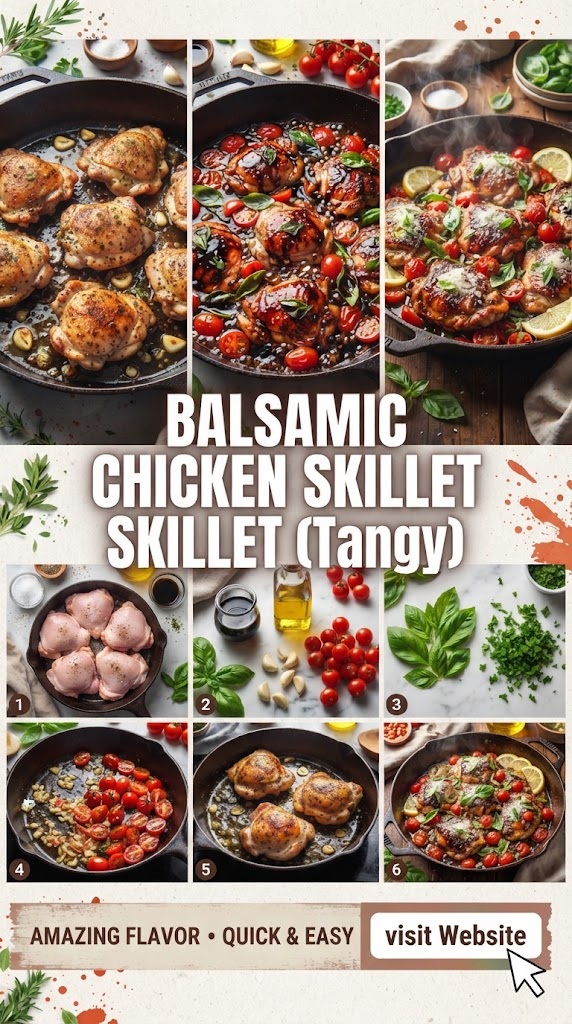
Balsamic Chicken Skillet (Tangy)
Balsamic Chicken Skillet (Tangy and Flavorful)
Balsamic Chicken Skillet is a delicious one-pan dinner that combines tender, golden-brown chicken with a rich, tangy balsamic sauce. The sauce has just the right balance of balsamic vinegar, garlic, herbs, honey, and chicken broth, creating a glossy coating that makes every bite incredibly flavorful.
This recipe is perfect for busy weeknights because everything comes together in one skillet. You do not need complicated equipment or a long list of ingredients. Chicken breasts are quickly seared until beautifully browned, then finished in a savory balsamic pan sauce. Add cherry tomatoes, spinach, or mushrooms if you want extra vegetables and color.
The result is a restaurant-style chicken dinner that is easy enough for a weeknight but impressive enough for guests.
Why You’ll Love This Balsamic Chicken Skillet
There are plenty of reasons to keep this recipe in your regular dinner rotation.
- One-pan meal: The chicken and sauce are prepared in the same skillet.
- Quick preparation: Most of the work can be finished in about 30 minutes.
- Big flavor: Balsamic vinegar provides a tangy, slightly sweet flavor.
- Tender chicken: Proper searing and finishing in the sauce keeps the chicken juicy.
- Simple ingredients: Most ingredients are pantry and refrigerator staples.
- Easy to customize: Add vegetables, cheese, herbs, or extra sauce according to your preference.
- Great for meal prep: The chicken reheats well when stored properly.
- Family-friendly: The tangy sauce can be adjusted to make it sweeter or milder.
Complete Recipe
Recipe Information
Prep Time: 10 minutes
Cook Time: 20 minutes
Total Time: 30 minutes
Servings: 4
Course: Dinner
Cuisine: American-Italian inspired
Cooking Method: Stovetop / Skillet
Difficulty: Easy
Ingredients
For the Chicken
- 4 boneless, skinless chicken breasts, about 6 ounces each
- 1 teaspoon salt
- ½ teaspoon black pepper
- 1 teaspoon Italian seasoning
- ½ teaspoon garlic powder
- 2 tablespoons olive oil
For the Balsamic Sauce
- ½ cup balsamic vinegar
- ½ cup low-sodium chicken broth
- 2 tablespoons honey
- 1 tablespoon Dijon mustard
- 3 cloves garlic, minced
- 1 teaspoon Italian seasoning
- ½ teaspoon salt
- ¼ teaspoon black pepper
- 1 tablespoon butter
Optional Vegetables
- 1 cup cherry tomatoes, halved
- 2 cups fresh baby spinach
- 1 cup sliced mushrooms
- ½ small red onion, thinly sliced
For Garnishing
- 1 tablespoon fresh parsley, chopped
- 1 teaspoon fresh thyme
- 2 tablespoons freshly grated Parmesan cheese, optional
- Freshly ground black pepper, optional
Ingredient Notes
Chicken
Boneless, skinless chicken breasts are ideal for this recipe. If your chicken breasts are very thick, slice them horizontally into thinner cutlets or gently pound them to an even thickness.
This is important because chicken breasts that are uneven in thickness can cook unevenly. The thin end may become dry while the thickest part is still undercooked.
You can also use boneless, skinless chicken thighs. They contain more fat and are naturally juicy, making them very forgiving.
Balsamic Vinegar
Balsamic vinegar is the key ingredient. It creates the signature tangy flavor.
For the best results, choose a good-quality balsamic vinegar with a balanced sweet-and-acidic flavor. You do not need an expensive aged balsamic for cooking, but extremely sharp vinegar can make the sauce too acidic.
Honey
Honey balances the acidity of the balsamic vinegar. It does not make the dish taste like dessert. Instead, it rounds out the sauce and gives it a subtle sweetness.
You can substitute maple syrup or brown sugar.
Dijon Mustard
Dijon mustard adds depth and a little sharpness. It also helps emulsify the sauce, giving it a smoother texture.
Chicken Broth
Chicken broth provides liquid for the sauce and helps loosen the flavorful browned bits from the skillet.
Low-sodium broth is recommended because you can control the salt yourself.
Garlic
Fresh garlic provides a much stronger and more aromatic flavor than garlic powder in the sauce. Mince it finely so it cooks evenly.
Butter
A small amount of butter stirred into the finished sauce makes it glossy, richer, and smoother.
How to Prepare the Chicken
Before cooking, remove the chicken breasts from the refrigerator and pat them thoroughly dry with paper towels.
Dry chicken develops a better golden-brown crust. Excess moisture can cause the chicken to steam rather than sear.
If the chicken breasts are thick, place each one between two pieces of plastic wrap or parchment paper and gently pound them until they are approximately the same thickness.
Do not pound them aggressively. The goal is simply to create an even thickness.
Season both sides with:
- Salt
- Black pepper
- Italian seasoning
- Garlic powder
Press the seasoning gently into the chicken so it sticks.
How to Make Balsamic Chicken Skillet
Step 1: Prepare the Sauce Mixture
Before turning on the stove, combine the balsamic vinegar, chicken broth, honey, Dijon mustard, Italian seasoning, salt, and black pepper in a small bowl.
Whisk until the honey and mustard are evenly incorporated.
Set the mixture aside.
Having the sauce ready before you begin cooking makes the process much easier because the chicken and skillet will already be hot when it is time to add the liquid.
Step 2: Heat the Skillet
Place a large heavy skillet over medium-high heat.
Cast iron, stainless steel, or a good-quality nonstick skillet can all work.
Add the olive oil and allow it to heat for approximately 30–60 seconds.
The oil should look glossy and move easily across the pan, but it should not be smoking heavily.
Step 3: Sear the Chicken
Carefully place the seasoned chicken breasts into the hot skillet.
Do not overcrowd the pan.
If your skillet is small, cook the chicken in two batches.
Allow the chicken to cook undisturbed for approximately 4–5 minutes on the first side.
You want a deep golden-brown crust.
Then flip the chicken and cook for another 3–4 minutes.
The chicken does not necessarily need to be fully cooked at this point because it will finish cooking in the balsamic sauce.
Remove the chicken from the skillet and place it on a clean plate.
Why Searing the Chicken Matters
Searing does more than simply brown the chicken.
When the chicken touches the hot skillet, the surface develops caramelized browned flavors. Small pieces of seasoning and chicken may stick to the bottom of the pan.
These browned bits are called fond.
When you add the balsamic mixture, the liquid loosens those flavorful pieces from the skillet. They become part of the sauce.
This is one of the secrets to making a simple skillet dinner taste much more complex.
Step 4: Cook the Vegetables
If you are using mushrooms or red onion, add them to the same skillet.
Cook for approximately 3–4 minutes.
Stir occasionally until the mushrooms begin to brown and the onion softens.
If you are using cherry tomatoes, add them toward the end of this step and cook for approximately 1–2 minutes.
You do not want the tomatoes to completely collapse.
If you prefer a simple chicken-only version, you can skip the vegetables.
Step 5: Add the Garlic
Add the minced garlic to the skillet.
Cook for approximately 30 seconds.
Stir continuously.
Garlic can burn quickly, especially in a hot skillet. Burned garlic can taste bitter, so keep this step brief.
Step 6: Deglaze With the Balsamic Mixture
Slowly pour the balsamic sauce mixture into the skillet.
Be careful because the liquid may bubble immediately when it touches the hot pan.
Use a wooden spoon or silicone spatula to scrape the bottom of the skillet.
This releases the browned chicken bits and incorporates them into the sauce.
Bring the mixture to a gentle simmer.
Step 7: Return the Chicken
Place the seared chicken breasts back into the skillet.
Reduce the heat to medium-low.
Spoon some of the balsamic sauce over each piece of chicken.
Cover the skillet loosely with a lid and allow the chicken to cook for approximately 5–8 minutes, depending on thickness.
The exact cooking time will vary according to the size of your chicken breasts.
Step 8: Check the Chicken Temperature
Chicken should be cooked to an internal temperature of 165°F (74°C) in the thickest part.
Use an instant-read thermometer for the most reliable result.
Insert the thermometer horizontally into the thickest portion of the chicken.
Avoid touching the skillet or bone, if using bone-in chicken, because that can produce an inaccurate reading.
Once the chicken reaches 165°F, remove it from the heat.
Step 9: Finish the Sauce
Remove the chicken from the skillet temporarily and place it on a plate.
Turn the heat to medium.
Allow the balsamic sauce to simmer for another 1–3 minutes.
The goal is to slightly reduce the liquid.
The sauce should become glossy and lightly thickened.
Do not reduce it too aggressively. Balsamic vinegar becomes increasingly intense as it reduces, so cooking it too long can result in an overly sharp sauce.
Turn off the heat.
Add the butter and stir until completely melted.
This final step creates a smooth, shiny sauce.
Step 10: Add Spinach
If you are using baby spinach, add it to the warm sauce.
Stir gently for approximately 1–2 minutes until the spinach wilts.
You can add more spinach if you want to increase the vegetable content of the meal.
Step 11: Finish the Dish
Return the chicken to the skillet.
Spoon the balsamic sauce over the top.
Add the cherry tomatoes and any other cooked vegetables.
Garnish with fresh parsley and thyme.
For an extra savory finish, sprinkle a small amount of freshly grated Parmesan over the chicken.
Serve immediately.
What the Finished Chicken Should Look Like
Perfect Balsamic Chicken Skillet should have several characteristics.
The chicken should be:
- Golden brown on the outside
- Juicy inside
- Tender enough to cut easily
- Coated with a glossy sauce
The balsamic sauce should be:
- Deep brown
- Slightly thick
- Smooth and glossy
- Tangy but not overwhelmingly acidic
- Balanced with subtle sweetness
The vegetables should remain flavorful and colorful rather than becoming completely mushy.
How to Prevent Dry Chicken
Dry chicken is one of the biggest concerns when cooking chicken breasts.
Here are several ways to prevent it.
1. Pound the chicken evenly
Uneven chicken cooks unevenly.
2. Do not overcook it
Use a thermometer and remove the chicken once the thickest part reaches 165°F.
3. Avoid excessively high heat
Medium-high heat is enough to create browning. Extremely high heat can burn the outside before the center cooks.
4. Let the chicken rest
After cooking, allow the chicken to rest for about 3–5 minutes.
This gives the juices time to redistribute.
5. Use chicken cutlets
Thin chicken cutlets cook quickly and evenly.
How to Make the Sauce Thicker
If your balsamic sauce seems too thin, simmer it uncovered for another minute or two.
Remember that it will continue to thicken slightly as it cools.
You can also make a cornstarch slurry if you want a noticeably thicker sauce.
Mix:
- 1 teaspoon cornstarch
- 1 tablespoon cold water
Stir until smooth.
Add a small amount to the simmering sauce while whisking.
Allow it to cook for about 30–60 seconds.
Do not add dry cornstarch directly to the hot sauce because it may form lumps.
How to Make the Sauce Less Tangy
If your sauce tastes too acidic, there are several ways to balance it.
Add:
- 1–2 teaspoons additional honey
- A small amount of butter
- A splash of chicken broth
Taste after each addition.
Avoid adding a large amount of sweetness at once.
The goal is balance rather than making the sauce sweet.
Vegetable Variations
This recipe works beautifully with many vegetables.
Balsamic Chicken With Mushrooms
Mushrooms pair especially well with balsamic vinegar.
Slice about 1 cup of mushrooms and sauté them after searing the chicken.
Cook until they are golden brown before adding the garlic and sauce.
Balsamic Chicken With Spinach
Add 2–3 cups of fresh baby spinach near the end.
The spinach wilts quickly and absorbs some of the balsamic sauce.
Balsamic Chicken With Tomatoes
Cherry tomatoes add sweetness and acidity.
Add them after the mushrooms or onions and cook briefly.
Balsamic Chicken With Broccoli
Steam or blanch broccoli separately, then add it to the skillet during the final few minutes.
Balsamic Chicken With Zucchini
Slice zucchini into half-moons and sauté until lightly browned.
Do not overcook because zucchini can become watery.
Serving Suggestions
Balsamic chicken is versatile and can be served with many different side dishes.
Mashed Potatoes
Creamy mashed potatoes are excellent with the tangy balsamic sauce.
Spoon the extra sauce over the potatoes for maximum flavor.
Rice
White rice, brown rice, jasmine rice, or basmati rice all work well.
The rice absorbs the sauce beautifully.
Pasta
Serve the chicken over spaghetti, penne, or bow-tie pasta.
You can toss the pasta with a little olive oil and Parmesan before serving.
Roasted Potatoes
Crispy roasted potatoes provide a wonderful contrast to the tender chicken.
Garlic Bread
Garlic bread is useful for soaking up the extra balsamic sauce.
Salad
For a lighter meal, serve the chicken with a simple green salad.
A salad with lettuce, cucumber, tomatoes, red onion, and a light vinaigrette works especially well.
Steamed Vegetables
Broccoli, green beans, asparagus, or carrots are easy side dishes.
Balsamic Chicken Meal Prep
This chicken can be prepared ahead of time.
Allow the cooked chicken to cool slightly, then divide it into airtight containers.
Store the chicken with some of the balsamic sauce so it remains moist.
Refrigerate for up to 3–4 days.
When reheating, use the microwave in short intervals or gently warm the chicken in a skillet over low heat.
Avoid overheating because repeated high-temperature reheating can dry out chicken breast.
Can You Freeze Balsamic Chicken?
Yes.
Allow the cooked chicken to cool completely before freezing.
Place the chicken and sauce in an airtight freezer-safe container.
Freeze for approximately 2–3 months for best quality.
Thaw overnight in the refrigerator.
Reheat gently in a covered skillet over low heat.
If the sauce becomes too thick after freezing, add a small splash of chicken broth while reheating.
Common Mistakes to Avoid
Mistake 1: Using Wet Chicken
If the chicken is wet, it will not brown properly.
Solution: Pat the chicken dry before seasoning.
Mistake 2: Overcrowding the Pan
Too many chicken breasts at once can cause steaming.
Solution: Use a large skillet or cook in batches.
Mistake 3: Burning the Garlic
Garlic only needs a short amount of time.
Solution: Add it after the vegetables and cook for about 30 seconds.
Mistake 4: Over-Reducing the Balsamic Vinegar
A heavily reduced balsamic sauce can become extremely strong.
Solution: Reduce only until the sauce is lightly thickened.
Mistake 5: Cutting the Chicken Immediately
Cutting immediately can allow juices to escape.
Solution: Rest the chicken for several minutes.
Mistake 6: Guessing Doneness
Chicken can look cooked before reaching a safe internal temperature.
Solution: Use an instant-read thermometer.
Tips for the Best Balsamic Chicken
Use a Heavy Skillet
A heavy skillet distributes heat more evenly and is excellent for browning.
Do Not Constantly Flip the Chicken
Leave the chicken undisturbed while the first side sears.
Scrape the Pan
The browned bits at the bottom of the skillet contain tremendous flavor.
Taste the Sauce
Balsamic vinegar varies in acidity and sweetness. Taste the sauce before serving and adjust it if necessary.
Add Fresh Herbs
Fresh parsley or thyme provides brightness and makes the finished dish look more appetizing.
Finish With Butter
Butter is optional, but it gives the sauce a richer texture.
Easy Balsamic Chicken Thigh Variation
Chicken thighs are an excellent substitute for chicken breasts.
Use approximately 6–8 boneless, skinless chicken thighs.
Season them the same way.
Sear the thighs skinless-side down if using boneless thighs, then flip and continue cooking.
Because thighs are naturally more forgiving, they are less likely to dry out.
Cook until the thickest part reaches at least 165°F.
For particularly tender thighs, you can cook them slightly longer as long as they remain juicy.
Balsamic Chicken With Mozzarella
For a richer variation, add fresh mozzarella during the final stage.
After the chicken is cooked, place a thin slice of mozzarella on each chicken breast.
Cover the skillet for 1–2 minutes until the cheese begins to melt.
Add fresh basil before serving.
The combination of balsamic, tomatoes, mozzarella, and basil creates a Caprese-inspired version.
Balsamic Chicken With Parmesan
For extra savory flavor, sprinkle freshly grated Parmesan over the finished chicken.
Parmesan pairs beautifully with the sweet-tangy balsamic sauce.
For an even more substantial crust, lightly coat the chicken with Parmesan before searing.
How to Make It Spicy
If you enjoy heat, add:
- ¼ teaspoon red pepper flakes
- ½ teaspoon smoked paprika
- A pinch of cayenne pepper
- Sliced fresh chili peppers
Add red pepper flakes when you add the garlic.
This allows the chili flavor to infuse the oil.
How to Make It Sweeter
For a sweeter balsamic glaze-style sauce, increase the honey from 2 tablespoons to 3 tablespoons.
You can also use maple syrup instead.
Taste the sauce before adding more sweetener because some balsamic vinegars are naturally sweeter than others.
How to Make It Creamy
For a creamy variation, prepare the balsamic sauce as directed and then reduce the heat to low.
Add approximately ¼ cup of heavy cream.
Stir gently until combined.
Do not boil aggressively after adding cream.
You can finish with Parmesan for an especially rich sauce.
Frequently Asked Questions
Can I use chicken thighs instead of breasts?
Yes. Boneless, skinless chicken thighs work extremely well and tend to remain juicier.
Can I make this without honey?
Yes. You can substitute maple syrup or a small amount of brown sugar. You can also omit the sweetener, although the sauce will be noticeably more acidic.
What if I don’t have Dijon mustard?
You can omit it or substitute a small amount of yellow mustard. Dijon provides the best flavor, but the recipe will still work without it.
Can I use balsamic glaze?
Yes, but use less because balsamic glaze is already reduced and concentrated. You may also need to reduce the honey.
Can I make this dairy-free?
Yes. Simply omit the butter and Parmesan. Replace the butter with another tablespoon of olive oil or a dairy-free butter alternative.
Can I make it gluten-free?
The basic recipe can be gluten-free, but check the labels on your chicken broth, Dijon mustard, and other packaged ingredients to ensure they are certified or labeled gluten-free if necessary.
What vegetables go best with balsamic chicken?
Mushrooms, spinach, tomatoes, asparagus, zucchini, broccoli, and onions all work very well.
Why is my balsamic sauce too sour?
The vinegar may be particularly acidic, or the sauce may have reduced too much.
Add a little honey, butter, or chicken broth and taste again.
Can I prepare the sauce ahead of time?
Yes. Mix the sauce ingredients together and refrigerate until you are ready to cook.
Nutrition Information
Approximate nutrition per serving will vary depending on the exact ingredients and portion sizes.
A serving of this Balsamic Chicken Skillet provides approximately:
- Calories: 400–450
- Protein: 45–50 g
- Carbohydrates: 15–20 g
- Fat: 15–18 g
- Fiber: 1–3 g
- Sugar: 10–14 g
- Sodium: Varies according to broth and added salt
These values are estimates rather than laboratory measurements.
Storage Instructions
Place leftovers in an airtight container and refrigerate within two hours of cooking.
The chicken can be refrigerated for approximately 3–4 days.
Store extra sauce with the chicken whenever possible.
When reheating, add a tablespoon of chicken broth if the sauce has become thick.
Warm gently until the chicken is hot throughout.
Complete Cooking Timeline
For an organized dinner, follow this simple timeline:
0:00–0:05
Prepare and season chicken.
0:05–0:07
Mix balsamic sauce ingredients.
0:07–0:12
Sear the chicken.
0:12–0:16
Cook optional vegetables.
0:16–0:17
Add garlic.
0:17–0:19
Add balsamic sauce and deglaze skillet.
0:19–0:26
Return chicken and finish cooking.
0:26–0:28
Reduce sauce and add butter.
0:28–0:30
Add spinach, garnish, rest briefly, and serve.
The Best Way to Serve Balsamic Chicken
For an attractive presentation, place a chicken breast in the center of each plate.
Spoon the balsamic sauce over the chicken rather than pouring all of it around the plate.
Arrange vegetables around the chicken.
Add a small amount of chopped parsley and fresh thyme.
If desired, finish with Parmesan and freshly cracked black pepper.
Serve alongside mashed potatoes, rice, pasta, roasted vegetables, or a crisp green salad.
The sauce is one of the best parts of the dish, so make sure there is enough available for spooning over the side dishes.
Final Recipe Card
Balsamic Chicken Skillet
Servings: 4
Prep: 10 minutes
Cook: 20 minutes
Total: 30 minutes
Ingredients
Chicken:
- 4 boneless, skinless chicken breasts
- 1 teaspoon salt
- ½ teaspoon black pepper
- 1 teaspoon Italian seasoning
- ½ teaspoon garlic powder
- 2 tablespoons olive oil
Sauce:
- ½ cup balsamic vinegar
- ½ cup chicken broth
- 2 tablespoons honey
- 1 tablespoon Dijon mustard
- 3 cloves garlic, minced
- 1 teaspoon Italian seasoning
- ½ teaspoon salt
- ¼ teaspoon black pepper
- 1 tablespoon butter
Optional:
- 1 cup cherry tomatoes
- 2 cups baby spinach
- 1 cup sliced mushrooms
- ½ small red onion
- Fresh parsley
- Fresh thyme
- Parmesan cheese
Instructions
- Pat the chicken dry.
- Season both sides with salt, pepper, Italian seasoning, and garlic powder.
- Whisk together balsamic vinegar, chicken broth, honey, Dijon mustard, Italian seasoning, salt, and pepper.
- Heat olive oil in a large skillet over medium-high heat.
- Sear chicken for 4–5 minutes on the first side.
- Flip and cook another 3–4 minutes.
- Remove chicken from the skillet.
- Cook mushrooms, onions, or tomatoes if using.
- Add minced garlic and cook for about 30 seconds.
- Pour in the balsamic mixture.
- Scrape the browned bits from the bottom of the skillet.
- Return chicken to the skillet.
- Reduce heat to medium-low.
- Cover loosely and cook until the chicken reaches 165°F (74°C) internally.
- Remove chicken from the skillet.
- Simmer the sauce uncovered for 1–3 minutes until slightly thickened.
- Turn off the heat and stir in butter.
- Add spinach if desired and allow it to wilt.
- Return chicken to the skillet.
- Spoon the sauce over the chicken.
- Garnish with parsley, thyme, and Parmesan if desired.
- Serve hot with your favorite side dish.
Final Thoughts
Balsamic Chicken Skillet is proof that a simple chicken dinner does not have to be boring. The combination of beautifully browned chicken, tangy balsamic vinegar, sweet honey, garlic, herbs, and a silky butter-finished sauce creates a meal with plenty of restaurant-style flavor while requiring only one skillet.
The key to success is controlling the heat, searing the chicken properly, avoiding overcooking, and reducing the balsamic sauce just enough to concentrate its flavor without making it excessively sharp.
Once you learn the basic method, you can easily customize the recipe with mushrooms, spinach, tomatoes, asparagus, zucchini, Parmesan, mozzarella, or a touch of spice.
Serve it over mashed potatoes or rice for a comforting dinner, pair it with roasted vegetables for a balanced meal, or serve it alongside a fresh salad for a lighter option.
Most importantly, keep an eye on the chicken’s internal temperature and use 165°F (74°C) as your safety target. With that simple step and a few flavorful ingredients, you can make tender, juicy, tangy Balsamic Chicken Skillet that is easy enough for a busy weeknight and impressive enough for a special dinner.